

Terra Industries, the Nigerian defence generation startup, has transform one of the crucial recognisable names within the African deep tech sector.
Terra has earned the visibility. Based in 2024 by way of Nathan Nwachuku and Maxwell Maduka, the corporate designs and manufactures independent drones, sentry towers and crewless floor cars, all attached via its proprietary ArtemisOS platform. In August, it closed a $52 million seed round, the most important in Africa. Terra provides a glimpse of what’s imaginable if an ecosystem can make stronger extra corporations to that level.
The United International locations Construction Programme defines deep tech as generation constructed on medical discoveries, engineering inventions and advances in analysis, with in depth analysis and building at its core. It contains corporations growing drones and robotics, semiconductor and computing applied sciences, biotechnology, scientific units and a few kinds of synthetic intelligence.
Companies in Africa’s tech ecosystem are most commonly constructed round the use of generation relatively than growing it. A fintech corporate can construct a bills product with out production the smartphone its consumers use, simply as a logistics startup can construct tool on best of cloud infrastructure or networks advanced and operated by way of different corporations. The underlying {hardware} and foundational programs exist already; those startups merely observe them to marketplace issues.
Deep tech brings that generation into the corporate. To show engineering breakthroughs into commercially viable merchandise, such corporations might want to design and again and again check prototypes, supply specialized elements, paintings with researchers and engineers, and get entry to laboratories or production amenities.
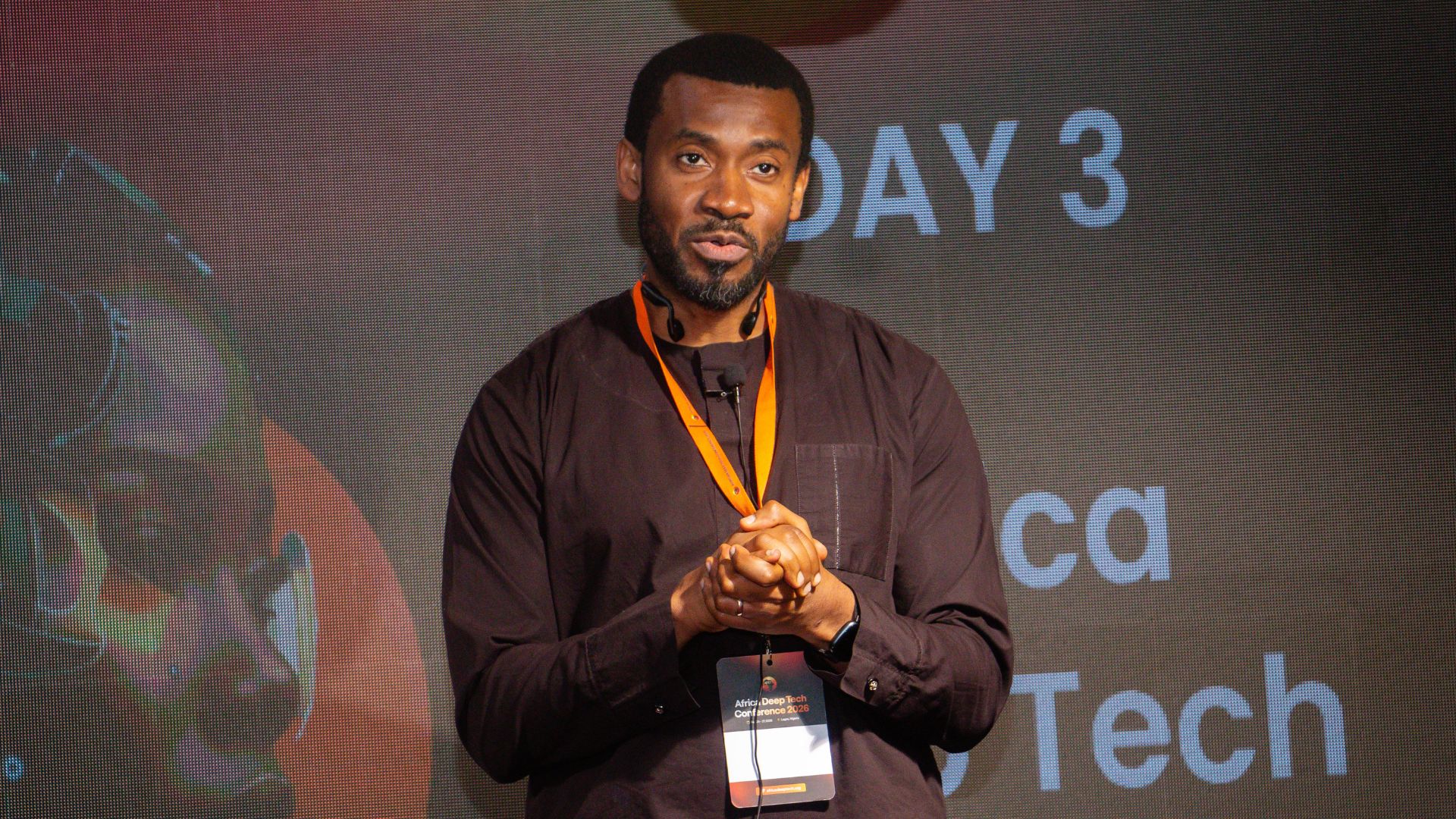
Construction deep tech is an uphill climb
For Chukwuemeka Afigbo, who convenes the Africa Deep Tech Foundation, a neighborhood enthusiastic about supporting deep tech developers and growing the ecosystem round them, {hardware} corporations locally have raised considerations about the price of bringing elements into the rustic.
“The {hardware} other people would inform you there’s numerous make stronger they want that they haven’t essentially observed. As an example, like insurance policies round the amount of cash they pay to usher in elements to construct stuff within the nation,” he stated in a dialog with TechCabal in October.
A 2021 baseline learn about commissioned by way of the Nigerian Communications Fee discovered that 84% of the hardware components utilized in Nigeria’s telecommunications sector are imported. The ones elements come with revealed circuit forums, semiconductors, connectors, antennas, and different digital portions. For {hardware} corporations construction and trying out merchandise in the community, elements that can not be sourced in the community will have to be imported, exposing them to delivery prices, foreign currencies actions, customs procedures, and import tasks.
Africa’s capability to supply one of the crucial applied sciences underpinning the worldwide economic system stays restricted. The continent accounts for less than 1% of worldwide semiconductor financial output, in keeping with the African Academy of Sciences. Its place within the semiconductor trade is targeted on design or trying out.
The similar constraints are changing into visual in synthetic intelligence. AI is now one of the most greatest generation conversations in Africa, however most of the merchandise to be had are constructed on infrastructure advanced in different places. Construction the underlying programs calls for specialized chips, information centres, engineering skill and analysis capability, and Africa lately accounts for 0.6% of global data-centre capacity.
Investment may be a constraint. In 2025, African startups raised $3.42 billion, with fintech accounting for $1.37 billion, or about 40% of the overall, in keeping with TechCabal Insights’ State of Tech in Africa document. A Briter Intelligence mapping of the sector discovered that African deep tech startups raised about $3 billion throughout 360 offers between 2013 and the primary part of 2023.
The economics of establishing deep tech may just lend a hand provide an explanation for this disparity. Import prices and a skinny analysis base could make a {hardware} corporate’s trail to earnings longer and its disasters costlier than the ones of a tool corporate. Capital has a tendency to observe companies the place there’s a transparent path to producing returns on investments.
Governments throughout Africa are being attentive to complicated generation, however AI has won a disproportionate percentage of that spotlight. Nigeria’s Nationwide Synthetic Intelligence Technique was once published in September 2025; Kenya adopted a national AI strategy in 2025; Egypt up to date its AI technique; and South Africa has been developing an AI policy framework to lead the rustic’s method to AI governance, building, and adoption.
The eye is comprehensible. AI is rising and attracting capital, however an AI-heavy coverage schedule dangers overshadowing the distinct, bodily calls for of the wider deep tech sector. As Afigbo notes, executive consciousness stays in its early phases. On the identical time, passion and scattered projects exist; public coverage has but to check the capital depth and supply-chain necessities of establishing exhausting tech at the continent.
“Sure, there may be executive consciousness and passion, however nonetheless quite nascent,” he stated. “Numerous excellent issues are going down, however we need10 instances greater than that to occur. It’s a adventure.”
Construction the prerequisites for deep tech
The Africa Deep Tech Basis has grown from a small on-line neighborhood right into a community of greater than 5,000 folks, with a core staff of about 200 deep tech practitioners throughout Africa and the diaspora, in keeping with Afigbo. He stated it has organised incubation programmes and rallied make stronger for early-stage founders. Different corporations also are operating on items of the ecosystem.
ChipMango, a semiconductor design and engineering skill building corporate, is training students and technical professionals in trendy chip design throughout Africa. Signvrse uses AI-powered 3D avatars to translate speech into signal language in actual time. NovFeed converts natural waste into high-protein fish feed to take on meals lack of confidence. Envisionit Deep AI automates radiology diagnostics in rural clinics. BasiGo and Spiro now arrange huge fleets of electrical buses and bikes supported by way of battery-swapping networks.
For the ecosystem to make stronger extra corporations on that adventure, it must create prerequisites that make construction deep tech more straightforward. This is able to come with capital, higher get entry to to production and specialized infrastructure, a deeper pool of engineering and analysis skill, and treating deep tech as a broader box than AI by way of growing insurance policies and infrastructure that make stronger the applied sciences underpinning the sphere.
Terra’s luck makes the potential for a thriving deep tech sector more straightforward to look. It displays that international traders are prepared to again an African corporate construction refined bodily generation. In the long run, whether or not Terra stays an peculiar outlier or turns into the leading edge of a broader motion is dependent upon whether or not Africa’s tech ecosystem can evolve speedy sufficient to satisfy the heavy calls for of deep tech.
True scale calls for transferring past surface-level integrations to tough execution. We’ve filtered the noise out of Moonshot 2026, optimising the convention strictly for high-calibre connections between startup founders, international monetary operators, endeavor leaders and folks rewiring Africa’s technical frameworks. Get 20% off Early Bird tickets for a limited time.
