

From Hubert Ogunde’s travelling theatre to NTA’s Village Headmaster and the bold celluloid generation, how a technology of courageous storytellers constructed an trade earlier than the time period Nollywood existed, writes SAMUEL ABULUDE
The Nigerian movie trade didn’t start with Nollywood. Lengthy earlier than the time period was once coined, and lengthy earlier than house movies flooded the markets of Idumota and Higher Iweka, there was once a movie tradition. In truth, the tale of movie in Nigeria predates the rustic’s independence.
Its earliest roots hint again to the travelling theatre motion of the Nineteen Fifties and 60s. Males equivalent to Hubert Ogunde, Duro Ladipo and Kola Ogunmola took Yoruba folklore, songs and ethical classes from village to village, from town to town. They had been the primary superstars, the primary manufacturers, and the primary to turn that Nigerians would pay to look at their very own tales.
Then got here a important turning level. The duration between 1966 and 1977 was once arguably probably the most vital transition in our efficiency historical past. The rustic was once in turmoil, but creativity was once booming. It served because the bridge connecting 3 nice eras.
On one aspect was once the golden generation of that travelling theatre. Alternatively, there was once tv. In 1968, the Nigerian Tv Authority (NTA) introduced _The Village Headmaster_. It was once Nigeria’s first genuine nationwide cleaning soap, and for 20 years it saved households glued to their black-and-white units. It created our first TV legends.
On the similar time, a brand new, formidable dream was once born: Indigenous Celluloid Cinema. This was once the generation of big-screen 35mm movie. Filmmakers equivalent to Ola Balogun, Eddie Ugbomah, and later Ade Love started to position Nigerian tales on celluloid. Motion pictures equivalent to Ajani Ogun (1976) and Kongi’s Harvest (1970) confirmed that shall we make cinema.
However the dream was once fragile. The movie trade, like the rustic, suffered beneath army rule. Harsh financial insurance policies, the devaluation of the naira, a loss of price range, and a loss of cinemas made celluloid filmmaking nearly unattainable. Many filmmakers went bankrupt. The reels disappeared. Via the past due Eighties, cinema tradition had nearly collapsed.
From that cave in, Nollywood rose. In 1992, Kenneth Nnebue shot _Living in Bondage_ on VHS on a shoestring price range. He had no concept he was once making a revolution. The inexpensive video layout sidestepped the issues of celluloid — no dear movie inventory, no use for cinemas. The movie may well be shot briefly and bought at once on cassette.
Nigerians had been hungry for their very own tales, and so they purchased them through the tens of millions. That singular good fortune opened the floodgates. Abruptly, everybody was once a filmmaker. A brand new, frenetic, can-do trade was once born within the markets of Lagos and Onitsha.
Nowadays, that trade has come far, from shaky VHS tapes to Netflix and Amazon Top, and from Idumota to the Toronto World Movie Pageant. The pioneers have left the level, however dwelling legends equivalent to Funny story Silva, Jide Kosoko and Pete Edochie stay — a hyperlink between the day gone by’s travelling theatre and lately’s world cinema.
We profile probably the most titans of the Nigerian movie trade.
Level Giants Of Travelling Theatre
Hubert Ogunde
Considered a pioneer of the Nigerian movie trade, the past due Hubert Ogunde toured all over Nigeria and West Africa with the Ogunde Live performance Celebration all through this decade earlier than making his mythical celluloid motion pictures.
Duro Ladipo
Duro Ladipo carried out his world-renowned Yoruba folks opera, Oba Koso, on native and world levels till his passing in 1978.
Kola Ogunmola
He was once a number one determine of the Yoruba Travelling Theatre, well-known for his iconic level adaptation of Amos Tutuola’s The Palm-Wine Drinkard.
Moses Olaiya (Baba Sala)
Baba Sala shaped the Alawada Team in 1966, pioneering tv comedy and level performances earlier than transitioning to celluloid.
Oyin Adejobi
He ran one of the crucial distinguished traveling theatre troupes out of Osogbo, generating well-liked level and tv performs all over the Nineteen Sixties and Nineteen Seventies.
Early Celluloid and Display Pioneers
Adeyemi Afolayan (Ade Love)
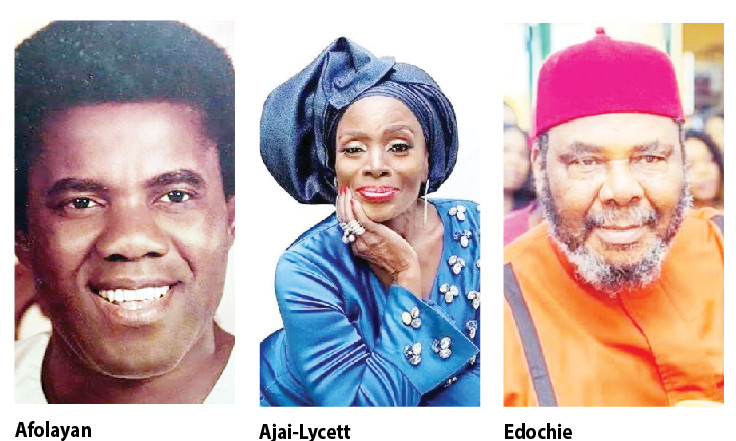
Ade Love joined Moses Olaiya’s crew in 1966, shaped his personal troupe in 1971, and starred in Ola Balogun’s landmark characteristic movie, Ajani Ogun (1976).
Jab Adu
He starred in Francis Oladele’s early characteristic movie, Kongi’s Harvest (1970), and performed a core position in The Village Headmaster.
Orlando Martins
Orlando Martins was once Nigeria’s first world movie actor. He returned to Nigeria all through this period to famous person in landmark native motion pictures equivalent to Kongi’s Harvest (1970) and Issues Fall Aside (1971).
Taiwo Ajai-Lycett
She is a dwelling legend (85), an actress, journalist, tv presenter and cosmetologist whose appearing debut got here in December 1966 in Wole Soyinka’s The Lion and the Jewel, a two-act comedy directed through William Gaskill on the Royal Courtroom Theatre in London.
Eddie Ugbomah
He started his filmmaking and appearing occupation within the mid-Nineteen Seventies, generating early Nigerian motion motion pictures on celluloid, together with The Upward push and Fall of Oyenusi (1977).
Early Tv Drama Actors (NTA Generation)
Ted Mukoro
Ted performed the unique Headmaster when NTA introduced The Village Headmaster in 1968.
Femi Robinson
He took over the enduring lead position of the Headmaster in The Village Headmaster from 1968 in the course of the early Nineteen Seventies.
Justus Esiri
Justus returned to Nigeria within the Nineteen Seventies after coaching in Germany, turning into a staple of level and tv drama and later taking part in the Headmaster.
Zainab Bukky Ajayi
Bukky Ajayi joined NTA in 1966 as a presenter earlier than transitioning to appearing in landmark tv dramas all through the Nineteen Seventies.
Lari Williams
Lari Williams actively carried out on UK and Nigerian levels and tv all over the Nineteen Seventies after coming back from formal dramatic coaching in Britain.
Veterans Energetic Right through This Generation
Taiwo Ajai-Lycett
Taiwo Ajai-Lycett is an actress, journalist, tv presenter and cosmetologist whose appearing debut got here in December 1966 in Wole Soyinka’s The Lion and the Jewel, a two-act comedy directed through William Gaskill on the Royal Courtroom Theatre in London.
Olu Jacobs
Olu Jacobs was once an actor and movie government whose occupation started with appearances in numerous British tv sequence and world productions earlier than he returned to Nigeria to give a contribution to the Nigerian film trade. He handed on 16 September 2026.
Lere Paimo (Baba Eda)
He featured prominently in Duro Ladipo’s troupe all over the past due Nineteen Sixties and Nineteen Seventies, together with in performs equivalent to Ogbori Elemosho.
Adebayo Salami (Oga Bello)
Oga Bello has been actively appearing with the Younger Live performance Celebration, later referred to as Awada Kerikeri, since 1964.
Kareem Adepoju (Baba Wande)
Baba Wande was once a core performer with the Oyin Adejobi Theatre Team all over the past due Nineteen Sixties and Nineteen Seventies.
Pete Edochie
He joined the Nigerian Broadcasting Company (NBC) in 1967 as a broadcaster and radio actor, paving the way in which for his display appearing occupation.
We’ve were given the threshold. Get real-time stories, breaking scoops, and unique angles delivered immediately in your telephone. Don’t accept stale information. Sign up for LEADERSHIP NEWS on WhatsApp for twenty-four/7 updates →