

Nigeria’s healthcare dialog would possibly wish to lengthen past hospitals and clinics because the rising burden of long-term care an increasing number of shifts to families.
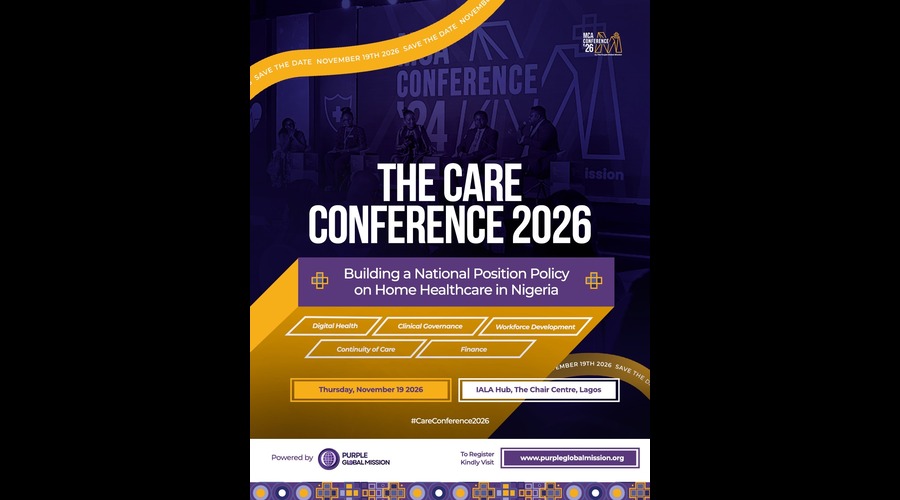
That is the focal point of the 2026 Care Convention, convened by means of The Pink World Challenge, which is able to read about how domestic care can turn into a structured part of Nigeria’s healthcare gadget relatively than a casual accountability in large part carried by means of households and particular person caregivers.
The convention, scheduled for November 19, 2026, in Lagos, will likely be held beneath the theme, “Care as Infrastructure: Construction a Nationwide Place on House Take care of Nigeria.”
On the centre of the dialogue is a query with vital financial implications: how does Nigeria account for, finance and control the care that occurs after a affected person leaves a health center?
Around the nation, households steadily take accountability for rehabilitation, aged care, incapacity reinforce, restoration and long-term help at domestic. Whilst those actions shape crucial a part of healthcare supply, they continue to be in large part out of doors formal well being programs and financing buildings.
“You can’t finance care you can not depend,” is among the propositions underpinning the convention.
The problem is especially related in a healthcare gadget the place families already lift a considerable percentage of healthcare prices. In line with figures cited within the convention temporary, roughly 71 according to cent of Nigeria’s well being spending is out of pocket, whilst medical insurance covers an estimated 10 to 13 according to cent of the inhabitants.
As extra care strikes from hospitals into houses, the monetary accountability can lengthen past clinical expenses to incorporate transportation, caregiving time, rehabilitation, nursing reinforce and different sorts of long-term help.
The convention will read about the programs required to make domestic care more secure, coordinated, measurable and sustainable, with discussions spanning group of workers building and coverage, medical governance, continuity of care, virtual well being infrastructure, care knowledge, financing and regulatory frameworks.
The focal point on knowledge is very important. With out dependable data at the quantity, nature and price of care being supplied out of doors formal well being amenities, policymakers and different stakeholders have restricted visibility into the size of the field and the sources required to reinforce it.
The discussions will even believe the transition from health center to domestic, together with structured discharge processes, home-based nursing and rehabilitation, virtual data and financing fashions that would cut back the weight lately carried by means of households.
For families, the results lengthen past healthcare prices. Lengthy-term caregiving too can position power on family source of revenue and productiveness when relations have to scale back running hours or go away employment to supply care.
A key function of the convention will likely be “The First Caregivers: The Circle of relatives Panel,” which is able to deliver the studies of Nigerians offering care at domestic into the coverage dialog. The development will even function the release of The Homecare Framework: Care as Infrastructure for On a regular basis Existence.
One of the vital meant results is the improvement and refinement of a Nigerian Nationwide Place on Care as Infrastructure, which The Pink World Challenge says will reinforce persisted coverage dissemination, legislative engagement and stakeholder discussion round how care is funded, regulated and built-in into Nigeria’s healthcare gadget.
Talking at the rationale for the initiative, Mrs Abiola Ayilara, Founding father of The Pink World Challenge, mentioned, “Care in Nigeria hasn’t ever been the issue, the absence of infrastructure round it has.”
The convention is predicted to deliver in combination policymakers, regulators, healthcare establishments, insurers, buyers, generation firms, building companions, care suppliers, lecturers and circle of relatives caregivers.
For Nigeria, the dialog is an increasing number of transferring past who supplies care to how the rustic can construct the programs, financing buildings and knowledge infrastructure had to acknowledge care as an integral a part of its healthcare gadget and wider economic system.