
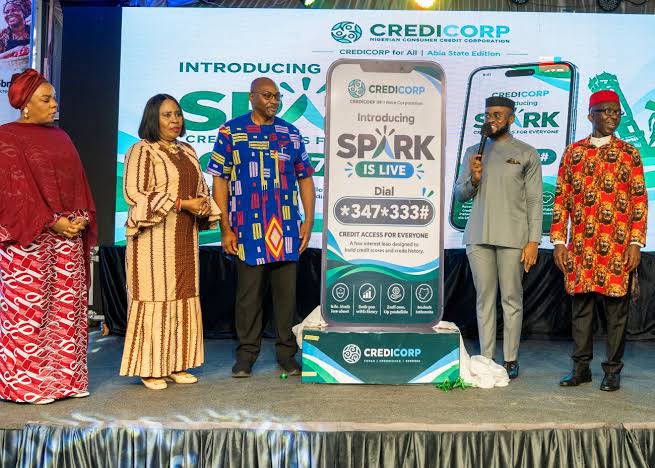
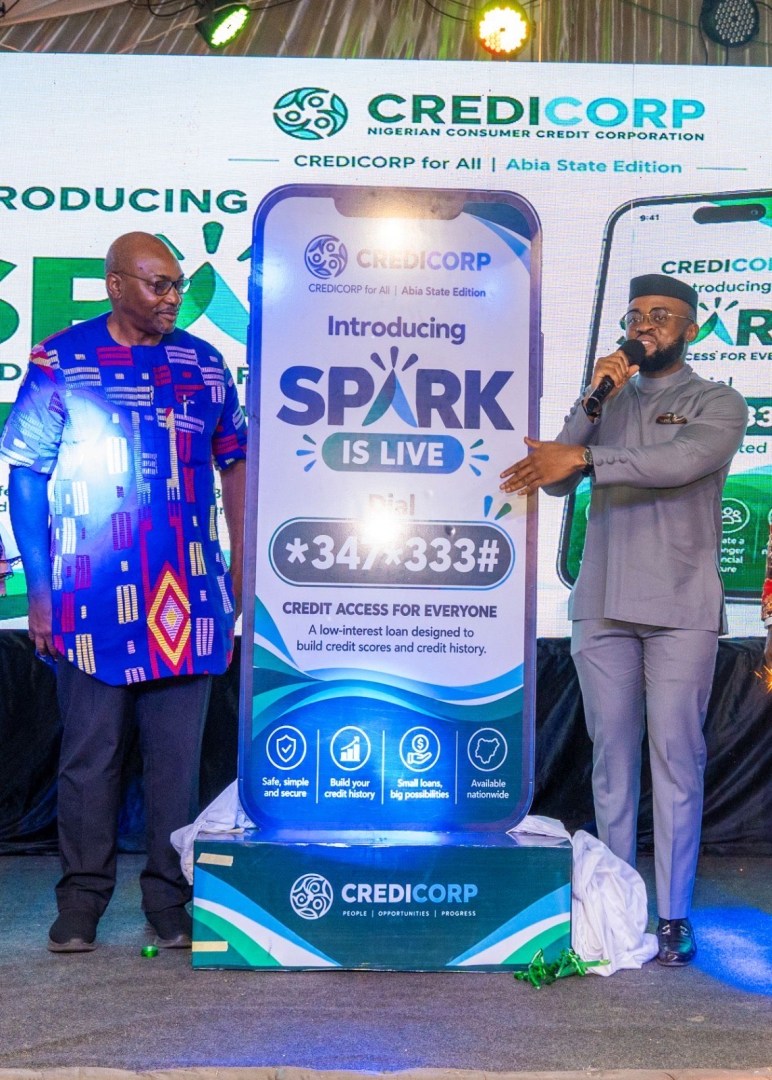
The Federal Government, through the Nigerian Consumer Credit Corporation (CREDICORP), has begun piloting a new loan product called SPARK that works on basic mobile phones through a USSD code, with no smartphone or internet connection needed. According to Vanguard, interested Nigerians can dial *347*333#. The move comes as digital finance keeps growing across the country, a trend also reflected in recent business reports such as eTranzact’s nine-month results.
Key Points at a Glance
| Item | Details |
|---|---|
| Product | SPARK |
| Introduced by | Nigerian Consumer Credit Corporation (CREDICORP) |
| Purpose | Help Nigerians, especially first-time borrowers, access consumer credit and build formal credit histories |
| Technology | USSD, so no smartphone or internet is needed |
| USSD code reported | *347*333# |
| Target beneficiaries | Nigerians with limited or no credit history |
| Reported requirements | BVN, NIN, bank account number, mobile phone, and no bad credit history |
| Availability | Pilot now; wider rollout expected before the end of 2026 |
What Is SPARK and How Is It Meant to Work?
SPARK is a small, entry-level credit product. The idea is simple: a person who has never borrowed formally, and so has no record with credit bureaus, can take a first loan using only a basic phone. If they repay on time, that repayment becomes part of a formal credit record. A good record can then help them qualify for larger loans from banks and other lenders later.
USSD is the same technology Nigerians already use to check bank balances or buy airtime by dialling a short code starting with an asterisk and ending with a hash. It works on any phone and any network, and it does not need data. That makes it suitable for people in rural areas, for market traders and for anyone who does not own a smartphone.
According to Vanguard, CREDICORP said SPARK is designed to simplify access to consumer credit while helping users build repayment records that could improve their credit profiles and open the door to further financial opportunities.
The Pilot in Aba
SPARK was piloted at the “CREDICORP for All” showcase in Aba, Abia State, on Wednesday, October 28, 2026. A report on the event said more than 1,000 residents attended. They included market women, young people and transport operators. Locally assembled tricycles were also offered on credit through CREDICORP’s S.C.A.L.E. initiative, which links consumers with Nigerian manufacturers and vendors.
CREDICORP’s Managing Director and Chief Executive Officer, Uzoma Nwagba, told the gathering that consumer credit should not be a privilege reserved for a few. He said the event showed what that means in practice, with credit for market women, a head start for young people, productive assets for transport operators and, through SPARK, a simple way for Nigerians to begin building credit histories.
Who Can Apply? The Reported Requirements
Reports circulating on the product say that potential beneficiaries should be Nigerians who have:
- A Bank Verification Number (BVN)
- A National Identification Number (NIN)
- A bank account number
- A working mobile phone
- No record of bad credit
These details are widely repeated, but readers should treat them with care. Legit.ng reported that CREDICORP had not disclosed the official USSD code, maximum loan amounts, interest rates or detailed eligibility requirements. It also said actual access to loans will depend on eligibility, participating lenders and the product’s eventual rollout. In other words, the code reported by Vanguard and the full terms of the loan have not all been confirmed in a detailed public notice.
Questions Nigerians Are Asking
- How much can I borrow? No maximum amount has been published.
- What is the interest rate? No rate has been published.
- How long do I have to repay? The repayment period has not been published.
- Is it really free of collateral? The product is described as entry-level credit for people with limited credit history, and reports say no collateral is required, but full terms are yet to be made public.
- Will it cost anything to dial the code? Network charges, if any, have not been stated. Users should check with their network provider.
Until CREDICORP releases a full guide, these questions remain open. Daily Talk has contacted CREDICORP for clarification and will update this report if it responds.
What Is CREDICORP? The Background
The Nigerian Consumer Credit Corporation, known as CREDICORP, is a federal government-owned development finance institution. According to its Wikipedia entry, it was set up in 2024 to expand access to affordable consumer credit for working Nigerians. The Consumer Credit Scheme took off on April 21, 2024, and it first targeted federal civil servants.
The idea behind consumer credit is straightforward. Instead of waiting until they can pay cash, people can buy goods or services such as phones, appliances, tricycles or school items on credit, and pay over time. Supporters say this helps households improve their lives and also creates demand for Nigerian manufacturers and traders. Critics say credit can trap people in debt if it is not carefully managed, which is why clear terms matter.
Early Interest and Early Numbers
Interest in the scheme was strong from the start. In May 2024, CREDICORP’s chief executive said about 1.6 million Nigerians had submitted applications. Supporters of the programme said the scheme was backed by an initial N100 billion, and that within five days of its launch it had disbursed N3.5 billion to 10,942 beneficiaries through participating financial institutions, according to a statement reported by News Agency of Nigeria.
In January 2025, Ecobank Nigeria also partnered with CREDICORP to offer affordable and flexible loans, according to the corporation’s Wikipedia entry. Other banks and lenders have taken part as participating financial institutions.
What CREDICORP Says It Has Achieved
At the Aba event, CREDICORP said that since it began operations it has enabled over N53.5 billion in consumer credit for more than 351,000 Nigerians. It added that about 59 percent of the beneficiaries were women. CREDICORP said it is working towards the Federal Government’s goal of extending consumer credit to at least 50 percent of working Nigerians by 2030.
These are figures provided by the corporation and the government. Daily Talk has not audited them. Earlier in 2026, the Secretary to the Government of the Federation, George Akume, gave an earlier figure of N37 billion in consumer loans, which suggests the total has grown since then. The Office of the Secretary to the Government of the Federation also said more than half of the beneficiaries had obtained formal credit for the first time.
Other Tinubu-Era Initiatives in the Same Family
SPARK is one of several programmes that the Tinubu administration places under its Renewed Hope Agenda and that deal with access to money, education or support for poorer households. Here is a short guide to the best-known ones, with figures as stated by the government or its agencies.
NELFUND: The Student Loan Scheme
President Tinubu signed the Student Loans (Access to Higher Education) Act on April 3, 2024, and the scheme was formally launched on July 17, 2024. The Nigerian Education Loan Fund (NELFUND) pays tuition directly to institutions and also gives students an upkeep allowance. The Guardian reported that NELFUND had disbursed N355.87 billion since the launch of its portal in May 2024, with 1,659,853 applications processed as of September 3, 2026.
Conditional Cash Transfers
The Renewed Hope Conditional Cash Transfer programme and its successor, the Household Prosperity and Empowerment Cash Transfer (HoPE-CT), give direct support to poorer households. In March 2026, the government said the programme had reached over 9.2 million Nigerians and was on track to cover 15 million households, with special N50,000 uplift grants planned for 3.6 million families.
Support for Small Businesses and Transport
The same government statement listed livelihood grants for 600,000 micro-businesses and the Compressed Natural Gas (CNG) initiative aimed at reducing transport costs. Separately, officials have spoken of a N200 billion fund to support micro, small and medium enterprises.
YouthCred and Other Credit Schemes
The President has also said that a credit scheme for young people, called YouthCred, is now a reality, with tens of thousands of NYSC members benefiting from consumer credit, as BusinessDay reported. Nigeria’s secretary to the government has said that nearly one million people have so far accessed support under various government credit schemes.
The wider government effort also includes projects outside finance, such as moves to link nature and national investment, as in our report on how Nigeria is deploying BIOFIN and a net-zero plan.
Why a Credit History Matters
For many Nigerians, the biggest barrier to a bank loan is not the interest rate but the lack of a record. Banks and lenders decide who to trust largely by looking at past borrowing and repayment. A person who has never borrowed formally has no record at all, so a lender cannot judge the risk. That is the gap SPARK is designed to close.
When a borrower repays a small loan on time, that fact is reported to a credit bureau. Over time, the person builds a score or history that can lead to larger and cheaper loans. The reverse is also true. Missing payments can damage a record and make future borrowing harder, so borrowers should only take what they can repay.
How the Digital Loan Market Looks Today
Nigerians already have access to many digital loan apps and bank USSD loans. Fintech lenders have become popular because they approve loans quickly and ask for fewer documents than banks. At the same time, borrowers have complained about high interest rates, short repayment periods and aggressive collection methods. The Central Bank of Nigeria’s 2026 fintech report highlights the fast growth of digital lending and its role in financial inclusion, while also pointing to regulatory gaps, according to a summary on Finance in Africa.
A government-backed product could offer an alternative, but only if its terms are clear and fair. This is why the missing details on interest, fees and repayment are important for readers to watch.
Safety First: How to Avoid Loan Scams
Whenever a new government scheme is announced, fraudsters move quickly. They create fake websites, fake WhatsApp groups and fake agents who promise easy loans for a small fee. Readers are urged to follow these rules:
- Do not pay to get a loan. Anyone who asks for an “activation fee,” “processing fee” or “insurance fee” before releasing a loan may be a fraudster.
- Never share your PIN, OTP or bank password. A genuine lender will not ask for these.
- Be careful with your BVN and NIN. Only enter them on official channels, and never send them to strangers on social media.
- Confirm the code. Because official terms have not been fully published, check CREDICORP’s official channels before relying on any code or link.
- Beware of imitators. Fake pages often copy the names and logos of government agencies.
- Read the terms. Before accepting any loan, make sure you understand the amount, the charges, the due date and the penalty for late payment.
- Report fraud. If you are scammed, report it to your bank and the police.
Different Views on the Scheme
Supporters say SPARK widens financial inclusion by bringing credit to people who have been left out, including women, small traders and young people. They argue that USSD is the right technology for a country where many people still use basic phones, and that building credit records will help the wider economy.
Critics and cautious observers say credit is not a replacement for jobs, income or lower living costs. Government officials have themselves acknowledged that inflation has caused hardship for many households. Some economists warn that small, easy loans can push poor families into debt if interest rates are high. Others note that political announcements ahead of the 2027 elections should be judged by results and by published terms, not by launch events.
Neutral observers say the real test will be in the details: the loan size, the cost, the repayment rules, how many people actually get loans, and whether the repayment records feed into the credit bureaus as promised.
What Happens Next
CREDICORP says SPARK will become more widely available before the end of 2026. Nigerians who want to use it should wait for an official notice with full terms, rather than relying on forwarded messages. Journalists, civil society groups and consumer-protection agencies will also be watching whether the product delivers what it promises.
For readers who want to keep track of their own money while borrowing, our Naira Rate Converter is available, and our FinTech and Business & Economy sections carry the latest updates.
Frequently Asked Questions
What is SPARK?
SPARK is a USSD-based entry-level credit product from CREDICORP. It is designed to help Nigerians, especially first-time borrowers, access credit and build formal credit histories.
What is the SPARK USSD code?
Vanguard reported the code as *347*333#. Legit.ng reported that CREDICORP had not publicly disclosed the official code, so readers should confirm it through official CREDICORP channels.
Do I need a smartphone or internet?
No. SPARK works through USSD on any phone and any network.
Who can apply?
Reports say Nigerians with a BVN, NIN, bank account number, mobile phone and no bad credit history. Full eligibility rules have not been published.
Is SPARK available to everyone now?
No. It is being piloted. A wider rollout is expected before the end of 2026.
What is CREDICORP?
The Nigerian Consumer Credit Corporation is a federal government-owned institution set up in 2024 to expand access to affordable consumer credit.
How can I avoid scams?
Do not pay any fee to get a loan, never share your PIN or OTP, and confirm any code or link through official channels.
Editor’s Note
This report is based on public statements by CREDICORP and the Federal Government, and on reports from Vanguard, BusinessDay, Legit.ng and other news organisations. Daily Talk has not independently verified the USSD code, the eligibility requirements or the loan figures quoted, and the full terms of SPARK have not been published. This article is for information only and is not financial advice. Readers should read all loan terms carefully and borrow only what they can repay. Daily Talk will update this story as verified details emerge.