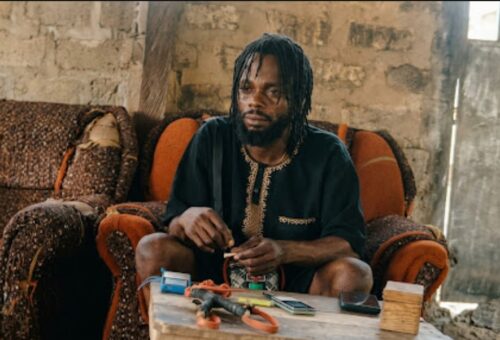


Peace crusader Aondongu Peter Suleagbough has replied to Ichen, an alleged bandit leader in the Sankera axis, saying freedom cannot be granted to him while he continues to keep firearms. In a Facebook post, Aondongu addressed the man as “Sada Tor a.k.a Chen I Tiv” and asked why he insists on holding weapons, questioning whether he is a security officer. The reply comes only days after Aondongu accepted a public challenge from another alleged bandit kingpin, Zegebra, and just ahead of his planned visit to Ayaba in Ukum Local Government Area on Monday, November 2, 2026.
Key Points at a Glance
- The reply: Aondongu posted on Facebook that Ichen can only have freedom if he gives up firearms, and asked whether he is a security personnel.
- The name used: Aondongu addressed him as “Sada Tor a.k.a Chen I Tiv.” Local accounts commonly refer to the alleged bandit leader as Ichen.
- The trigger: Ichen had reportedly claimed he went into hiding after hearing that armed fighters were being mobilised by other bandit groups ahead of Aondongu’s Ayaba visit.
- The date to watch: Monday, November 2, 2026, the day Aondongu says he will be in Ayaba, Ukum.
- The caution: None of the claims has been confirmed by the police, the army or any government agency.
What Aondongu Said
According to the post seen by Daily Talk, Aondongu wrote a short and pointed message to the man he called Sada Tor, also known as Chen I Tiv. He told him that if he wants freedom, he knows what to do. He then asked a direct question: why is he insisting on keeping firearms, and is he a security officer?
“If you want freedom you know what to do.”
The message is short, but it carries a clear meaning for many readers in Benue. The suggestion is that a person who holds illegal weapons cannot expect to live freely, and that the way out is to give those weapons up. The second question is a pointed reminder that, under Nigerian law, carrying arms is generally the work of trained and authorised security personnel, not private individuals.
What Does “Freedom” Mean Here?
Aondongu did not spell out what he meant by freedom in the post, and Daily Talk has not been able to ask him. Readers have offered different readings. Some believe he is referring to freedom from pursuit, fear and hiding, which Ichen had reportedly said he was experiencing. Others read it as an invitation to surrender and return to ordinary civilian life. Still others see it as a warning that only disarmament can end the standoff.
Because the post does not give details, it is best to treat these as interpretations rather than facts. What is clear is that Aondongu is linking any future peace to one condition: laying down arms.
The Claim That Started This Exchange
Aondongu’s reply follows a separate report in which Ichen was said to have confirmed that he had run into hiding. In that account, Ichen reportedly claimed that armed fighters had been mobilised ahead of Aondongu’s planned visit to Ayaba and that he feared the unknown. He was also quoted as saying nobody could find him no matter how they searched.
That claim has not been verified, and Daily Talk has no independent confirmation that any armed group was brought into the area. It is also important to treat any suggestion about the identity or background of unnamed fighters with care. Criminal acts are carried out by individuals and gangs, not by whole communities or ethnic groups, and Benue residents of every background have suffered from the insecurity in Sankera.
Seen together, the two statements form an unusual public conversation. One side says he is hiding out of fear. The other side answers that safety and freedom depend on giving up guns.

Who Is Aondongu Peter Suleagbough?
Aondongu Peter Suleagbough emerged about three months ago as a self-styled peace crusader in Sankera, the area made up of Katsina-Ala, Ukum and Logo local government areas of Benue State. He has urged armed robbers, kidnappers and bandits to drop their weapons and return to peaceful lives, warning that those who refuse will face the consequences.
He has described himself as the figure that residents should fear, rather than the criminals who have terrorised their communities. To his supporters, he is a brave young man giving voice to people who have been silent for too long. To his critics, his style is risky, confrontational and potentially dangerous for ordinary villagers.
Aondongu has also spoken about a personal loss. In a widely shared social media post reported by the local outlet Benue Today, he said his late brother, Zaki Sylvester Peter Suleagbough, was killed by members of a criminal network, and he welcomed the arrest of another alleged bandit leader in Taraba State. These are his own allegations, and no court has ruled on them.
More recently, the Chairman of Katsina-Ala Local Government Area and head of the Association of Local Governments of Nigeria (ALGON) in Benue State, Rt. Hon. Dr. Shaku Justine, donated a vehicle to Aondongu to support his movements. The council chairman praised his commitment and advised him to stay away from politics and remain focused on his peace mission.
How the Zegebra Challenge Began
To understand why a Facebook reply has drawn so much attention, it helps to look back at how the standoff started.
After Aondongu began issuing his warnings to criminals, several alleged bandit leaders, including those known as Ichen, Full Fire and Zegebra, reportedly dismissed his words as empty intimidation. Rather than keep quiet, they were said to have challenged him to a physical confrontation at a neutral location in Zaki Biam.
Aondongu accepted. A venue was later discussed, although reports suggested it was in the home village of Zegebra himself, which led many to ask how neutral the ground really was. In a Facebook post, Aondongu then named Ayaba, in Ukum, as the place where he would appear on Monday, November 2, 2026.
The announcement raised a series of questions across the state:
- Would the police, the army and other agencies allow a public showdown involving alleged armed men?
- What would happen to innocent villagers if violence broke out near the venue?
- Would Aondongu go alone, with escorts, or under official protection?
- Could the arrangement turn out to be a trap?
The picture then shifted. A day before the planned meeting, Zegebra stepped back. In a report on his decision, Daily Talk explained that Zegebra withdrew from the face-off, saying Ayaba is not a battlefield. He reportedly suggested other locations instead. According to accounts circulating locally, Aondongu has not changed his plan to go to Ayaba. Ichen’s claim of going into hiding, and Aondongu’s reply about firearms, came after that.
Why Ayaba Matters
Ayaba is a community in Ukum Local Government Area, one of the three councils that make up the Sankera axis. Like many villages in the area, it sits within a wider landscape that has experienced years of insecurity. Residents of communities like this often say they feel caught between criminal groups on one side and a limited security presence on the other.
A gathering of any size in a place like Ayaba carries risk. Crowds can attract attackers. Rumours can spread quickly and cause panic. For that reason, security experts generally advise against large public gatherings in areas where armed groups operate, unless the police and the military have secured the venue in advance.
Protecting lives and property is the constitutional responsibility of the police, the military and other security agencies, not private citizens. That is why many residents are waiting to see whether the authorities will step in before Monday.
What Nigerian Law Says About Firearms
Aondongu’s question about whether Ichen is a security personnel touches on a point of law that many readers may not know. In Nigeria, civilians generally cannot own or carry firearms without a licence, and the rules are strict. Possession of illegal firearms is a criminal offence, and the penalties can be severe, especially where the weapons are linked to robbery, kidnapping or killings.
Daily Talk is not a court, and nobody mentioned in this report has been convicted of any offence. The point is simply that holding firearms outside the authority of the state is a serious matter under Nigerian law, and that disarmament is widely seen by peace-building experts as a first step towards security in conflict-affected areas.
Past experience in Nigeria shows that disarmament programmes work best when they are organised by the state, supported by community leaders, and paired with practical help such as jobs, training and a safe route back to civilian life. The Niger Delta amnesty programme of 2009 is often cited as an example, although it also drew criticism over how it was managed and how long its benefits lasted.
The Wider Unrest in Sankera
The exchange between Aondongu and Ichen is only the latest chapter in a long and painful history. Sankera has been one of the most troubled parts of Benue State for more than a decade.
The Roots of the Crisis
Reports trace the modern conflict to around 2015. A militia led by Terwase Akwaza, popularly known as Gana, clashed with rival armed groups and with security forces. After the military killed Akwaza in 2020, his former associates reportedly split into rival factions, a development that many observers say made the security situation more complicated and more unpredictable.
Bans, Curfews and Court Battles
As attacks continued, the state government tried several measures. The Benue State Security Council banned motorcycles in Katsina-Ala and Ukum “till further notice” and ordered security operatives to arrest violators and impound their machines. Tricycles, popularly called Keke, were allowed to continue operating.
The ban was later extended to all three Sankera councils. Then-Governor Samuel Ortom also banned old-model Toyota Corolla cars, nicknamed “duck nyash,” after the killing of Dr. Terkula Suswam. Officials said the attackers had used a motorcycle and that type of car. A dusk-to-dawn curfew was also imposed on Ukum and Katsina-Ala after persistent attacks that led to many deaths.
The policy did not go unchallenged. A High Court in Gboko set aside the Security Council’s order, and Ortom directed that the ban be lifted in Sankera. Later, the state restricted okada operations statewide to between 6 a.m. and 8 p.m., citing the movement of suspected bandits fleeing other states.
Attacks That Shook the Community
Violence has continued despite these measures. In August 2024, police confirmed that bandits attacked Ayati village in Ukum Local Government Area, leaving 15 residents dead, along with two police officers who responded to the distress call, according to a report in THISDAY. Governor Hyacinth Alia condemned the killings and expressed concern that such attacks were continuing despite the presence of security agents and regular dialogue with stakeholders and traditional rulers.
More recently, Premium Times reported that nine people died in fresh attacks in Benue, days after killings in Otukpo. A source quoted in that report said the Sankera axis has become a shadow of itself because of insecurity, and that some communities had been deserted.
The Human Cost
Behind every headline are real families. Community elders have said that almost all schools and health facilities in Sankera have been closed for nearly a decade. Farmers have abandoned their land. Traders have left. Children have missed years of schooling. Young people have grown up in an environment where fear is part of daily life.
Governor Alia has said that local bandits rejected his peace overtures. Even so, Catholic priests have reportedly persuaded some armed men to lay down their weapons since 2023, which shows that dialogue and trust-building can sometimes succeed where force alone does not.
Different Views Across Benue
Opinion across the state remains divided about Aondongu’s approach.
Supporters say he is speaking for ordinary people who are tired of living in fear. They argue that years of official promises have not delivered peace, and that a bold public stand, even a risky one, has pushed the conversation back into the open. For them, his demand that armed men give up their weapons is simple common sense.
Critics say peace cannot be built through public dares and social media exchanges. They worry that the back-and-forth gives attention to armed men, raises the chances of reprisals and distracts from the work of security agencies. Some are also uneasy about the involvement of politicians, noting that the 2027 elections are approaching and that insecurity in Benue has become closely tied to politics.
Neutral observers say that whatever one thinks of the method, the episode highlights a deeper problem: many communities feel the state has not done enough to protect them, which creates space for self-styled saviours and for rumours of every kind.
Security Agencies Under Pressure
The public exchange puts renewed pressure on the police, the army and other agencies operating in Benue State. Residents want to know what plans are in place for Monday. Specifically, people are asking:
- Will security forces be deployed to Ayaba and nearby communities to prevent violence?
- Will they protect Aondongu, or advise him to call off the visit?
- Will they investigate the claims made by both sides?
- Will they reassure residents who may be afraid to leave their homes?
At the time of publication, there was no official response. Daily Talk will update this report if a statement is issued.
Nigerian law is clear that only the state may lawfully use force. Security experts caution that a showdown between a private citizen and an alleged armed leader can easily escalate and put innocent people at risk. Most peace-building specialists recommend dialogue, community trust, structured disarmament and the involvement of traditional rulers and religious leaders.
Why Misinformation Is a Real Danger
In a tense environment like Sankera, rumours can be as dangerous as bullets. A false report that an attack is coming can send hundreds of families fleeing their homes. A false claim about who is fighting whom can inflame ethnic and religious suspicion. Social media posts, voice notes and screenshots spread within minutes and are often impossible to verify.
Residents and readers are encouraged to:
- Rely on official statements from the police, the army and the state government.
- Avoid forwarding unverified messages, photos or videos.
- Refrain from blaming any ethnic or religious group for the actions of criminals.
- Report suspicious activity to the nearest police station or through official emergency lines.
- Avoid crowding any area where security tension has been reported.
What Happens Next
All eyes are now on Monday, November 2, 2026. Several outcomes are possible. The visit could go ahead peacefully. Security agencies could intervene and restrict access to Ayaba. Aondongu could change his plans after talks with community leaders or officials. Or tension could rise if armed groups respond in unpredictable ways.
It is also possible that Ichen will respond to Aondongu’s post, either publicly or through intermediaries. Whether that leads to calm or to more heated exchanges remains to be seen. Traditional rulers, clergy and community leaders have an important role in encouraging restraint, and many residents will be praying that the day passes without bloodshed.
Whatever happens, this episode has put Sankera back in the national spotlight and raised hard questions about how Nigeria should deal with armed groups, protect rural communities and rebuild trust between citizens and the state.