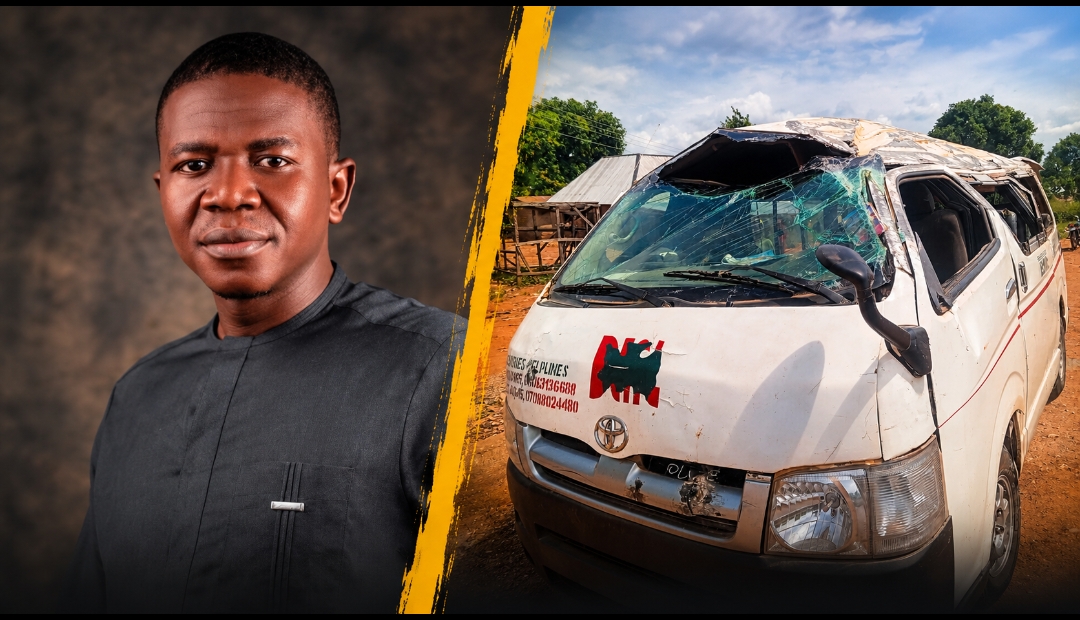
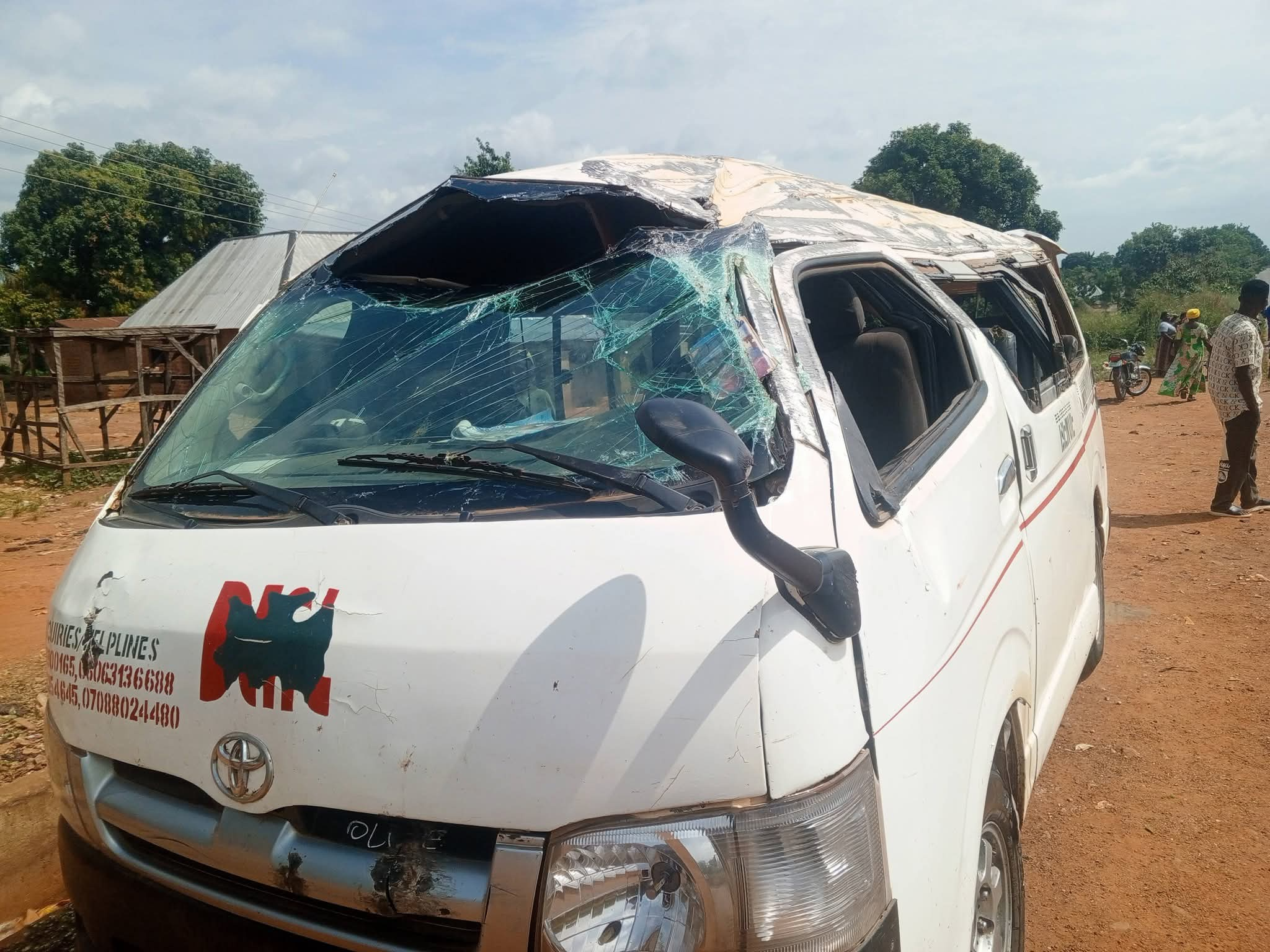
A Benue Links bus carrying 18 passengers from Adikpo to Makurdi somersaulted and rolled for about 20 metres at Akerior, in Ushongo Local Government Area (LGA) of Benue State, on Saturday, October 31, 2026, leaving several passengers with serious injuries. The crash adds to growing worry about road safety in the state, coming soon after the death of Benue PDP member Hon. Smith Tyonor in a motorcycle collision in Makurdi.
What we know so far
- What happened: A Benue Links bus somersaulted and rolled about 20 metres.
- Where: Akerior, Ushongo Local Government Area, Benue State.
- When: About 1 p.m. on Saturday, October 31, 2026.
- Route: Adikpo to Makurdi.
- People on board: 18 passengers, according to a survivor.
- Injuries: Several passengers suffered varying degrees of serious injury.
- Treatment: Some victims were taken to NKST Health Centre, Taangahar, for first aid.
The number of deaths, if any, has not been confirmed in the account available to DAILY TALK, and no official statement from the Federal Road Safety Corps (FRSC) or the police had been seen at the time of publishing. This report will be updated as verified details emerge.
How the crash happened
According to Terna, the bus was travelling from Adikpo, in Kwande LGA, towards Makurdi, the Benue State capital, when it was involved in what he called a “ghastly” accident. The vehicle did not simply leave the road. It somersaulted, then rolled along the ground for roughly 20 metres before coming to a stop.
A vehicle that overturns and rolls like this puts enormous force on everyone inside. Passengers are thrown against seats, windows and each other, and the roof can be crushed. That several people on board were seriously hurt, and that Terna himself walked away unhurt, shows how unpredictable such crashes can be.
The cause of the accident has not been established. Investigators, usually the FRSC and the police, normally look at speed, tyre condition, mechanical faults, road surface and driver fatigue before reaching a conclusion. Until an official finding is released, any claim about the cause would be speculation.
Residents to the rescue
Many survivors of road crashes in Nigeria owe their lives to ordinary people who happen to be nearby, and this case appears to be no different. Terna said residents of the area rushed to the scene, broke the windows of the bus to reach the trapped passengers, and then worked together to lift the vehicle back upright.
He thanked them publicly. In rural parts of Benue, where emergency vehicles can take a long time to arrive, such quick action often decides who survives. Breaking windows, pulling passengers out and raising an overturned bus are tasks that need many hands, and the residents of Akerior supplied them.
Akerior lies in Ushongo, an LGA that has also featured in recent political headlines. The ruling party and the opposition have traded words over Governor Hyacinth Alia’s visit to Ushongo, a reminder that the area sits at the centre of attention in Benue’s current affairs.
Injured taken to NKST Health Centre, Taangahar
Some of the injured passengers were rushed to NKST Health Centre in Taangahar, where they received first aid. NKST stands for Nongo u Kristu u Ken Sudan hen Tiv, a major church in Tiv-speaking communities that runs hospitals and clinics across the region.
First aid is the first step in treatment, not the last. Passengers with deep wounds, fractures, head injuries or internal bleeding often need to be moved to larger hospitals with surgeons, X-ray machines and blood banks. Terna warned that some victims may be transferred to other facilities for better treatment, which is why tracing a relative may take more than one phone call or one visit.
Families struggle to reach loved ones
In the confusion after the crash, several victims tried to call their relatives but could not get through. Calls went unanswered or the numbers could not be reached, likely because phones were damaged, switched off, out of battery or out of network coverage. For families waiting at home, that silence can be agonising.
Terna appealed to anyone with a relative who travelled from Adikpo to Makurdi between 12 noon and 1 p.m. on October 31, 2026, to check on them. If you are worried about someone, here is what you can do:
- Keep calling, and send text messages. Texts can sometimes go through when voice calls fail.
- Call the driver’s park or the Benue Links office in Adikpo or Makurdi and ask for the passenger list.
- Visit NKST Health Centre, Taangahar, and ask whether your relative was brought in.
- Ask about transfers. Some patients may have been moved to bigger hospitals in or around Makurdi.
- Contact the FRSC or the police if you cannot find the person after checking medical facilities.
- Share verified information only. Avoid forwarding unconfirmed names or casualty figures, which can cause panic.
A survivor’s message: “I came out unhurt”
Terna’s Facebook post is as much a testimony of faith as a crash report. He thanked God for sparing him again and said this was not the first road accident he has survived. He prayed for a quick recovery for the injured and asked God to protect travellers and to keep accidents away from his own life.
The tone of the post is typical of how many Nigerians process road tragedies, through gratitude, prayer and community. But it also points to a harder truth: some people have now survived several crashes, which suggests the roads and vehicles they depend on remain dangerous.
A troubling pattern on Benue roads
The Akerior crash is not an isolated event. Benue’s highways have seen a long list of deadly accidents. The Guardian reported that a head-on collision between a Toyota bus and a Sharon bus on the Makurdi–Gboko Highway in Tarka LGA killed at least six people, and the FRSC sector commander blamed over-speeding. Leadership newspaper also covered that crash, noting that a child was among the dead.
On the Makurdi–Otukpo road, Trust Radio reported that an 18-seater Benue Links bus and a truck collided, killing six passengers and injuring twelve. And in late 2025, police in Benue detained three transport union officials after a multiple-vehicle crash on the Katsina-Ala highway claimed nine lives.
Together, these reports point to recurring problems: speeding, overloaded or poorly maintained vehicles, damaged roads, obstructed highways and limited emergency response in rural areas. Each one is a risk on its own. Combined, they make long-distance travel a gamble for thousands of passengers every week.
Why road safety matters beyond Benue
Road crashes are a global emergency. The World Health Organization reports that around 1.19 million people die on the world’s roads each year, and that road traffic injuries are a leading cause of death for children and young adults. Low- and middle-income countries, including Nigeria, carry a disproportionate share of that burden.
In practical terms, that means every bus that overturns is part of a bigger story about how roads are built, how vehicles are checked and how drivers are trained and supervised.
How passengers and drivers can reduce the risk
No traveller can control every danger, but a few habits can improve your chances. The Federal Road Safety Corps regularly urges motorists and passengers to follow basic safety rules.
For passengers:
- Wear a seatbelt whenever one is available, even on short trips.
- Speak up if the driver is speeding or driving recklessly. You have a right to ask for safer driving.
- Avoid overloaded vehicles and buses with worn tyres or obvious mechanical faults.
- Share your journey details with a relative: the park, vehicle type, departure time and expected arrival.
- Keep your phone charged and save an emergency contact on the lock screen.
For drivers and transport companies:
- Service vehicles regularly and replace worn tyres before long trips.
- Follow speed limits and avoid driving when tired.
- Keep an accurate passenger manifest, which helps families and rescuers after an accident.
- Train drivers in first aid and emergency response.
What happens next
Several questions remain. Officials have yet to explain what caused the bus to somersault, how many people were hurt, or how many remain in hospital. Families will want to know whether any passengers are in critical condition and where they are being treated. Benue Links, the FRSC, the police and the state government are the bodies best placed to answer, and their statements will help clear up confusion.
For now, the immediate priority is the injured. Prayers and good wishes are pouring in, as Terna’s post shows, but what the victims need most is quick medical care, accurate information for their relatives and, in the longer term, safer roads.
Bottom line
A Benue Links bus rolled about 20 metres at Akerior, and 18 passengers faced a frightening ordeal. Thanks to the fast action of local residents, they were pulled to safety, and some of the injured are receiving treatment at NKST Health Centre, Taangahar. If you have a loved one who travelled from Adikpo to Makurdi on October 31, 2026, between 12 noon and 1 p.m., check on them and, where necessary, visit the health centre to ask after them.
DAILY TALK will continue to follow this story. For more breaking news from Benue and across Nigeria, visit the Metro section of DAILY TALK.
Have information about the Akerior accident or a missing relative? Share verified details with the DAILY TALK newsroom through the Contact Us page.