

[ad_1]
By way of Fatima Mohammed-Lawal
One in 4 stroke circumstances in Nigeria impacts other people beneath 50, elevating considerations concerning the illness’s rising burden amongst younger adults.
Prof. Kolawole Wahab, Head of the Stroke Unit on the College of Ilorin Instructing Health facility (UITH), disclosed this on Thursday in Ilorin.
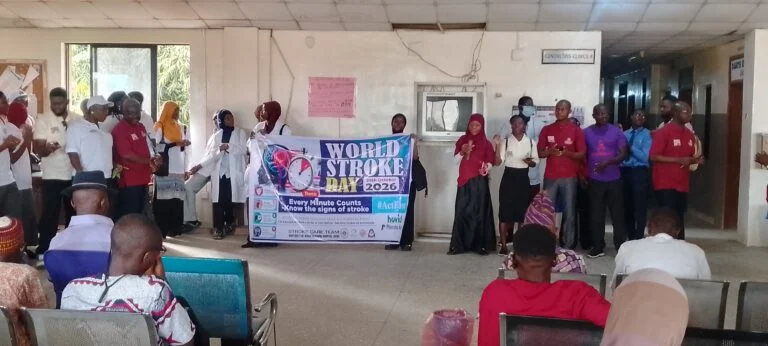
He spoke at the sidelines of a scientific rally commemorating the 2026 International Stroke Day, with the theme ‘Each and every Minute Counts’, which highlights the significance of recommended remedy
Wahab stated analysis revealed in 2017 had documented the superiority of stroke amongst more youthful Nigerians.
“Once we speak about stroke within the younger, we’re speaking about those that are beneath the age of fifty.
“One out of each 4 circumstances of stroke in Nigeria is usually a case of stroke within the younger. The superiority is as top as 25 in line with cent.
“We see people who find themselves of their 40s, some of their 30s, coming down with stroke,” he stated.
The neurologist described the stroke burden within the area as epidemic, including that UITH’s emergency division receives one or two stroke sufferers day by day.
He known high blood pressure as Nigeria’s main stroke chance issue, caution that deficient blood force keep an eye on may just build up the possibility of the situation.
In keeping with him, as much as 9 out of each 10 stroke circumstances have high blood pressure as an underlying issue.
Wahab expressed fear that some sufferers abandon prescribed drugs in favour of unproven therapies, leaving their blood force out of control.
He additionally known diabetes as every other main chance issue, noting that some other people stay unaware they’ve the situation.
Others, he stated, forget right kind diabetes control despite understanding their standing.
“It’s till they’ve suffered from stroke that they change into mindful they’ve diabetes,” he stated.
Wahab indexed imbalances in blood fat amongst different chance components, explaining that peculiar ranges of fine and unhealthy fat may just give a contribution to stroke.
He warned towards smoking, over the top alcohol intake, exhausting medicine and sedentary existence, urging Nigerians to undertake fitter conduct.
The professional additionally instructed other people to average their salt consumption, specifically the ones recognized with high blood pressure.
He cautioned towards including desk salt to foods after preparation, stressing the significance of controlling blood force.
Additionally talking, Dr Wemimo Olaofin, a specialist neurologist at UITH, advised Nigerians to test their blood force frequently.
Olaofin stated stroke may just happen all of sudden at any time, however preventive measures and right kind well being control may just scale back the chance.
He inspired the general public to watch their blood force and embody fitter existence to forestall the situation.
Mrs Tejumola Olayinka, Deputy Director of Nursing in control of UITH’s Stroke Care Unit, stated the commemoration aimed to advertise consciousness and early health facility presentation.
“Stroke case is an emergency case that calls for well timed intervention. We will scale back the selection of mortality and in addition scale back the selection of other people with stroke,” she stated.
Olayinka described stroke as a surprising prevalence, “like a slap”, and highlighted facial drooping, arm weak spot and slurred speech as caution indicators.
She advised other people exhibiting those signs to be rushed to health facility instantly for scientific consideration.
The nursing director additionally warned stroke sufferers towards failing to take prescribed drugs, noting that some sufferers didn’t adhere to remedy despite understanding their situation.
As a part of the commemoration, UITH organised an consciousness rally around the health facility and scientific outreach programmes on the instructing health facility and Kwara Executive Space.
Two beneficiaries, Mr Jimoh Abdullateef and Mrs Fatima Abdulazeez, counseled the scientific workforce for offering loose scientific services and products and distributing medicine. (NAN)
Edited through Kamal Tayo Oropo
[ad_2]
Source link