

Key Points at a glance
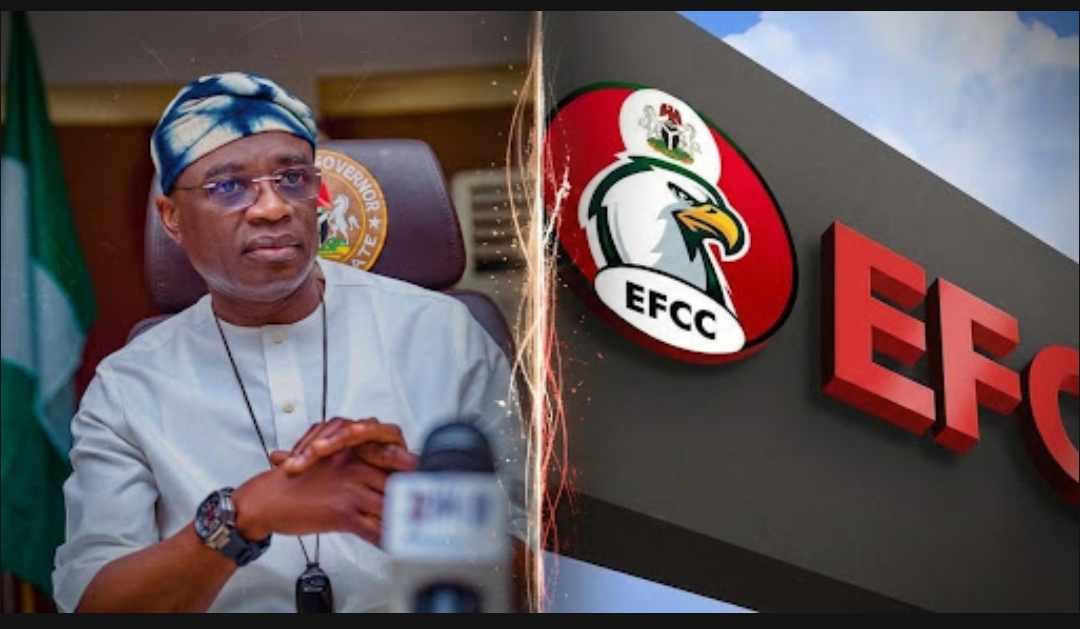
- The EFCC is reportedly investigating the award of technical college contracts valued at over ₦100 billion.
- More than 60 contractors petitioned the anti-graft agency, saying they were defrauded.
- An EFCC source alleges the contracts were awarded last year without the approval of Governor Hyacinth Alia.
- The source alleges that a man who presented himself as a government aide collected large sums from contractors.
- None of these claims has been tested in court, and the officials and individuals named had not publicly responded.
What the Contractors Say
According to Daily Trust, the complaints came from more than 60 contractors who say they used their own money to start building additional technical colleges across Benue. They allegedly did so after being assured that the projects had government approval.
The contractors reportedly began raising concerns when they struggled to get paid for work already done, which pushed them to petition the EFCC, according to a separate report by Annahda. The same report said the commission had questioned four senior Benue State government officials, although the detail has not been confirmed by the EFCC in any public statement that Daily Talk has seen.
In simple terms, the contractors are saying that they spent their own funds on projects they believed were official, and that they now cannot recover that money.
What the EFCC Source Alleges
The account of what went wrong comes from an EFCC source who spoke to Daily Trust on condition of anonymity, because he was not authorised to speak publicly. Because the source is unnamed and the EFCC has not issued a public statement on the matter, readers should treat the details as allegations and not as established facts.
The source said the contracts, valued at over ₦100 billion, were awarded last year without the approval of Governor Alia. That detail is important. It means the allegation, as reported, is that the contracts did not have the governor’s sign-off, and not that the governor approved them.
The source further alleged that a man named Lawrence Kyaku, who reportedly presented himself as a Senior Special Assistant to the governor, persuaded contractors to start work by claiming that the administration had approved the projects. The source quoted in the report said the man “had been claiming he is the SSA to the Governor.” Daily Talk has not independently confirmed whether Mr Kyaku holds or has ever held any government position.
The source also alleged that Mr Kyaku collected large sums of money from some contractors while claiming he could facilitate the projects. These included more than ₦100 million from one contractor and ₦50 million from another, according to the report. A letter and account details reportedly given to the contractors made them believe the projects were genuine government contracts, the source said.
Daily Talk could not reach Mr Kyaku for comment, and his side of the story has not been reported. He is entitled to the presumption of innocence, as is everyone named in connection with the probe.
Official Responses So Far
At the time of the Daily Trust report, the government officials who were questioned had not responded to the allegations, and efforts by journalists in Makurdi to obtain their comments were unsuccessful. Daily Talk invites the Benue State Government, the governor’s office, the EFCC and anyone named in these reports to respond, and will publish their statements in full.
Why Technical Colleges Matter
Technical colleges train young people in practical trades such as electrical work, carpentry and welding, which can lead directly to self-employment. The issue has been on the state’s agenda for some time. An official of Benue’s Science and Technical Education Board previously said the state had 18 technical colleges, which he described as inadequate, and called for at least one in each of the 23 local government areas, according to Daybreak. He also pointed to a shortage of technical teachers as a major challenge.
That background explains why plans for new technical colleges attracted attention, and why any problems with the contracts matter beyond the contractors. If projects are stalled or left unpaid, it is students and communities who wait longest for the facilities.
Earlier Petitions and Denials
This is not the first time Benue’s administration has faced petitions to the EFCC. In 2024, a group called Concerned Citizens of Benue for Good Governance petitioned the commission over alleged misuse of funds, according to ThisDay. The government rejected claims of missing funds at the time, ThisDay reported, with an official saying the administration was not afraid of any petition.
A separate petition by a private citizen, Dzahemen Jerry Asom, was circulating on social media in late 2025, according to Benue Today. That report said no public information at the time confirmed an investigation into the contracts it described.
A petition is only a complaint. It becomes evidence only if investigators find documents, payments or testimony to support it. The new technical college probe is different in one respect: it is reportedly based on complaints from contractors who say they paid money or carried out work, and the EFCC is said to have begun questioning officials.
What an EFCC Investigation Means
The EFCC is the Nigerian agency responsible for investigating financial crimes and corruption. When it opens an investigation, it may invite people for questioning, request documents and trace payments. You can read about its work on the EFCC’s official website.
An investigation is not a finding of guilt. The agency may decide to charge people, to close a case for lack of evidence, or to recommend other action. Under Section 36 of Nigeria’s 1999 Constitution, a person accused of a crime is presumed innocent until a court decides otherwise. That principle applies to everyone in this case, including the officials who were questioned and the individual named by the source.
What Happens Next
It is not yet clear how long the investigation will take, which officials will be asked to give further statements, or whether anyone will be charged. The EFCC has not made a public announcement, and the details so far rest on reports citing an anonymous source. Developments will depend on what documents and testimony investigators gather, and on whether the people named choose to respond.
For the contractors, the main question is whether they can recover money spent on work they thought was official. For Benue residents, it is whether the technical colleges will eventually be built and funded properly.
Daily Talk will keep following the story and will update this report when the EFCC, the state government or the individuals named respond. For more coverage of governance and accountability in Benue and across Nigeria, visit our Politics section, and read our reporting on the wider political developments in the state ahead of the 2027 elections.