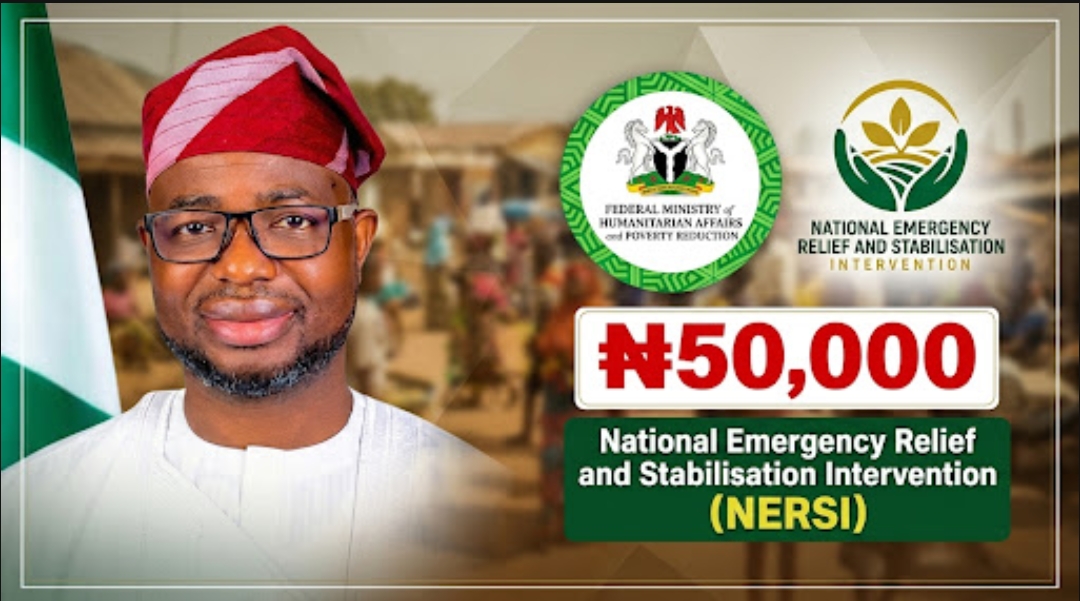
The National Emergency Relief and Stabilisation Intervention (NERSI) is a Federal Government programme meant to support vulnerable households facing rising living costs. According to a statement by the ministry’s Director of Information and Public Relations, Janet Mcdickson Noah, the explanation is intended to help Nigerians understand the programme and guard against misinformation.
Key Points at a glance
- Beneficiaries are chosen from the National Social Register and verified national identity records.
- Selection is based on poverty and vulnerability criteria and covers all six geopolitical zones.
- There is no application or registration process, and no individual or agent can influence selection.
- Each selected beneficiary receives ₦50,000. It is not a loan and does not have to be repaid.
- Selected people get an SMS from an authorised digital financial service provider.
- The official helpline is 0700-022-2222.
What the Ministry Said
In its clarification, the ministry answered a set of frequently asked questions about the relief fund. On its official X account on Friday, November 6, it summed up the position in one line: “Beneficiary selection is automated; no application, payment or personal influence is required,” according to First Daily News.
The fuller statement, reproduced by NPower DG, repeats that nobody can pay to secure a place on the list or to speed up a payment. The ministry added that it remains committed to delivering the programme with transparency, accountability and dignity, in line with President Bola Tinubu’s Renewed Hope Agenda.
Who Is Eligible?
According to the ministry, beneficiaries are selected from two official sources. The first is the National Social Register, a government database of poor and vulnerable households. The second is verified national identity records. From those records, selection is made on poverty and vulnerability criteria, and the ministry says it covers all six geopolitical zones of the country.
In simple terms, the government is choosing people from lists it already holds. It is not inviting the public to sign up. That is why being outspoken online, knowing an official or paying an agent makes no difference, according to the ministry.
It is also worth noting that being listed in the National Social Register does not automatically mean a household will be paid. Earlier reports on the wider social protection system said that not every household in the register is immediately eligible for a specific cash support scheme. Households can therefore be on the register and still not be in the first group of payments.
No Application, No Agents, No Fees
The clearest message in the ministry’s statement is that there is no application or registration process. That message has been repeated in several official statements since the programme began on October 30. Legit.ng reported that the ministry warned against individuals who might demand money or promise to influence selection.
This matters because fraud often follows government giveaways. Fraudsters usually claim they can “register” people, add names to a list or release money faster in exchange for a fee. The ministry says none of that is possible. Anyone who asks for a payment in connection with NERSI is not working for the programme.
What Beneficiaries Receive and How
Each selected beneficiary receives ₦50,000. The ministry stressed that the money is not a loan and does not need to be repaid.
Selected people are told through an SMS from one of the authorised digital financial service providers. These are ALAT by Wema Bank, MoMo Payment Service Bank, NairaGram, OPay and Moniepoint, according to PRNigeria. The message explains how to accept the offer, usually by replying or dialling a USSD code, and the money is then paid into a mobile wallet. PRNigeria also reported that beneficiaries do not need a smartphone or internet access, because USSD codes work on basic phones.
MTN users who have been selected can follow the MoMo PSB steps reported by Vanguard, while customers who use OPay can read Daily Talk’s step-by-step guide on how OPay users can get the ₦50,000 NERSI relief. Both explain how to confirm a notification and withdraw the money.
Payments are being made in phases, so not everyone receives a message on the same day. Nigeria Startup News reported that some Moniepoint customers began receiving credits on November 4, which shows the process is already under way for some people.
How to Protect Yourself From Scams
The ministry also asked beneficiaries not to share their Personal Identification Number (PIN), One-Time Password (OTP) or Bank Verification Number (BVN) with anyone. No genuine provider needs those details to credit a grant.
These basic steps can help:
- Trust only messages that come from one of the five approved providers.
- Never share your PIN, OTP, BVN or password, even with someone who claims to be an official.
- Do not click links in unexpected messages, and do not pay anyone to “unlock” the money.
- Ignore social media posts that promise payment within hours after you send a message.
- If you are unsure, call the NERSI helpline on 0700-022-2222.
The ministry asks that all enquiries and complaints be directed to that helpline. More information is available on the ministry’s official NERSI page.
Questions That Remain
The clarification answers many questions, but not all of them. Three issues stand out.
1. Is the payment monthly or one-off? When the programme was announced, Minister Bernard Doro described a monthly payment. However, the programme’s own frequently asked questions page describes a one-off payment, according to Nigeria Housing Market, which flagged the difference. First Daily News also described the payment as one-time. Until the ministry settles the matter, beneficiaries should treat ₦50,000 as the amount they will receive after accepting, and should not count on later payments.
2. What exactly are the criteria? The ministry says selection is automated and based on poverty and vulnerability, but Legit.ng noted that it did not explain the specific criteria used. Some Nigerians online have asked why they appear ineligible. Without published criteria, it is hard for the public to judge whether the system is fair.
3. When will everyone be paid? Daily Trust reported that the government has not published a detailed timetable showing when each batch of beneficiaries will be paid, or how long the intervention will run.
Civil society has also weighed in. ActionAid Nigeria praised the programme but urged the government to clarify whether the ₦50,000 is a one-off grant or a monthly payment, and to be open about its duration, Blueprint reported.
What If You Were Not Selected?
Not every Nigerian will be selected, because the programme targets poor and vulnerable households. People who have not received a message should check their status through their provider’s USSD channel, as the government has advised, and not assume they were excluded or that someone can “fix” it for a fee.
If you believe you should qualify, the safest step is to keep your phone number and national identification number up to date and to use only official channels for enquiries. No agent or middleman has the power to add a name to the list.
The Bottom Line
The ministry’s message is simple. NERSI beneficiaries are chosen from official records, there is no application, and nobody can influence the process. Each person selected receives ₦50,000 as a grant and is told by SMS from an approved provider. The sensible response from the public is equally simple: wait for a genuine message, protect your PIN, OTP and BVN, and pay nobody.
Important questions remain on payment frequency, selection criteria and timing, and Daily Talk will report any further clarification from the ministry. For more coverage of government relief programmes and the economy, visit our Business & Economy section, and for news on mobile money and digital payments, see our FinTech page.