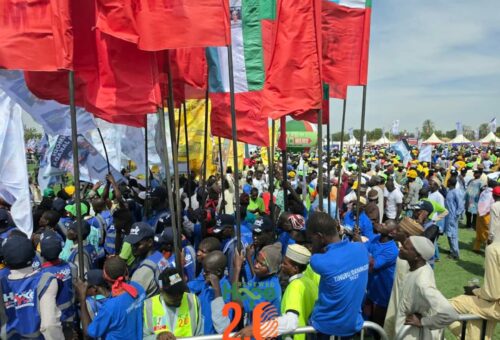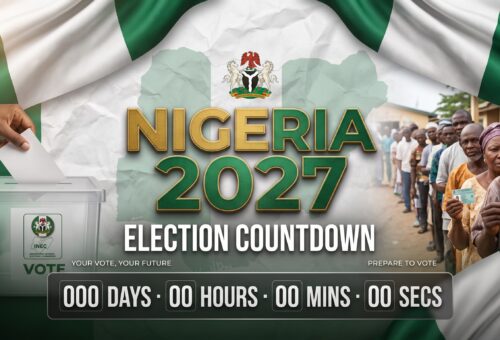
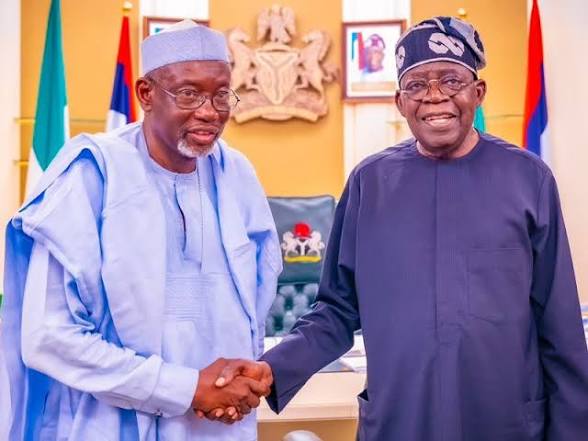
President Bola Ahmed Tinubu is scheduled to arrive in Jigawa State on Tuesday to commission four development projects and address a rally of the All Progressives Congress (APC). The visit brings his re-election campaign to the North-West with less than ten weeks to go before voters head to the polls. As the Nigeria 2027 election countdown moves toward the presidential vote on 16 January 2027, Governor Umar Namadi has described the trip as the president’s first official visit to the state since he took office in May 2023.
Key points at a glance
- President Tinubu is expected in Dutse on 10 November 2026 for an APC presidential campaign rally and project commissioning.
- The Jigawa State Government declared the day a public holiday to allow residents to take part.
- Four projects are listed for inauguration: a technical services centre, a skills acquisition centre, an agricultural mechanisation programme and a dualised road in Dutse.
- Nigeria’s presidential and National Assembly elections are set for 16 January 2027, with governorship polls on 6 February 2027.
- Supporters credit the removal of the fuel subsidy and the unification of the foreign exchange market for higher revenue to the states. Critics point to a sharp rise in the cost of living.
- The rally follows earlier campaign stops in Kaduna, Akwa Ibom and Rivers states.
A first official visit, a public holiday and four projects
The Jigawa State Government says it has prepared carefully for the president’s arrival. Speaking to journalists in Dutse after inspecting the project sites, Governor Namadi said preparations were largely in order, although some adjustments were still being made after a joint review with representatives of the Presidency. He urged residents to turn out in large numbers to welcome the president, and he said security chiefs and members of the state security committee had been briefed on arrangements to keep the events safe.
The governor also said the state had more completed projects available for commissioning, but he limited the programme to four, all in the capital, so that it would fit the president’s schedule.
The four projects are the Renewed Hope Technical Services Centre, the Bola Ahmed Tinubu Multipurpose Skills Acquisition Centre, an agricultural mechanisation programme and a dualised road in Dutse, according to a report by Arise TV that Legit.ng cited. The farming package includes 400 tractors, 60 combine harvesters, 150 boom sprayers and 150 seeders, along with other equipment meant to raise output across the state. In a state where most people earn a living from the land, the mechanisation programme is likely to draw particular attention from farmers.
A presidential aide, Abdulaziz Abdulaziz, said the visit is meant to showcase the administration’s achievements, Vanguard reported. It is worth noting that titles such as “Hero of Democracy” and “Father of Modern Nigeria” are honorifics used by the president’s supporters. They are political descriptions, not official designations, and they reflect the admiration of those who back him rather than a settled national verdict.
Why Jigawa matters in the January vote
Jigawa is a state where the APC has performed strongly in recent presidential elections. APC officials say former President Muhammadu Buhari won 794,738 votes in the state in 2019, about 71.84 per cent of the votes cast, and that the party now wants to deliver two million votes for Mr Tinubu in 2027, according to Vanguard. That is an ambitious target, and the party will need strong turnout to reach it.
The party’s machinery in the state has been busy for weeks. The national chairman of the APC, Professor Nentawe Yilwatda, inaugurated the Jigawa presidential campaign council in Dutse and told elected and appointed officials to return to their constituencies and mobilise supporters. That instruction matches a wider directive reported by Daily Talk that ministers and appointees must attend 2027 campaign rallies only in their home states. Separately, the senator representing Jigawa North-East, Ahmed Abdulhamid Malam Madori, donated vehicles to support the campaign, according to ThisDay.
The contest is not a one-horse race. The Independent National Electoral Commission (INEC) has published a final list of 18 presidential candidates, and opposition parties are also courting voters in the North, where a large share of the country’s registered voters live. INEC’s revised timetable fixed the presidential and National Assembly elections for 16 January 2027, with governorship and state assembly elections to follow on 6 February 2027. Under the law, campaigns must end 24 hours before voting day.
Where the campaign has been before Jigawa
The Jigawa rally is the latest stop on a campaign that began on 24 October in Kaduna, where Mr Tinubu formally flagged off his re-election bid, according to Pulse Nigeria. He then travelled to Akwa Ibom and Rivers states on 6 and 7 November. In Uyo, he was scheduled to commission seven projects, including a new international terminal building at the Victor Attah International Airport, and to attend a political rally. The Port Harcourt rally on 7 November was described by Legit.ng as his third campaign outing since the Kaduna flag-off. At that event, Rivers State Governor Siminalayi Fubara thanked the president for his role in the state’s recent political crisis, Sahara Reporters reported. The APC has said Mr Tinubu will personally attend rallies in only 12 states between October 2026 and January 2027, with party leaders covering the rest of the country, allAfrica reported.
The reforms behind the rally
To understand why the APC is putting such emphasis on Jigawa’s development record, it helps to look at the decisions that supporters say made that record possible. When Mr Tinubu took office on 29 May 2023, he announced the end of Nigeria’s long-running fuel subsidy. The central bank later moved to unify the country’s multiple exchange rates and let the naira float. The government argued that the old arrangements drained public funds, favoured people who profited from the gap between official and market prices, and discouraged genuine investors.
Both decisions were painful in the short term, and even many supporters acknowledge it. Fuel prices rose sharply, transport and food costs followed, and the naira lost much of its value. Yet there was a second effect that matters to state governments. Money shared monthly through the Federation Account Allocation Committee (FAAC) has risen sharply since the reforms, driven by savings from subsidy payments, exchange rate adjustments and higher revenue.
Governor Namadi has repeatedly said the larger allocations gave Jigawa the fiscal space to pursue development on a scale that was hard to imagine before. His argument, shared by many in the APC, is that the reforms rescued the country from a deeper fiscal crisis and gave states the means to deliver more for their people. Readers who want to track how exchange rate movements affect prices and transfers can use the Naira Rate Converter on Daily Talk.
Federal projects in and around Jigawa
Supporters of the administration point to several federal projects as evidence of what they call the Renewed Hope Agenda.
The Greater Dutse Water Supply Project. The Federal Executive Council approved the contract in October 2024 at about ₦59.46 billion, the News Agency of Nigeria reported. The scheme was flagged off in December 2024, and the water minister, Joseph Utsev, described it as a revival of a project that had been abandoned for more than two decades. Officials say it is designed to serve more than 1.5 million residents of Dutse and its surroundings and to close a daily supply gap of about 10 million litres. According to the project description provided to this newsroom, it includes 35 industrial boreholes with solar-powered pumps, a treatment plant with a capacity of 1,000 cubic metres per hour, transmission mains and storage tanks. Governor Namadi has said the project fulfils a promise Mr Tinubu made to the late Emir of Dutse during his 2023 campaign. Officials have given different completion timelines, from 12 to 24 months, so residents will be watching closely.
The standard-gauge railway. The Kaduna–Kano–Jigawa–Katsina–Maradi railway is another major federal undertaking. According to information provided to this newsroom, the project had reached about 60 per cent completion by mid-2026, with work continuing on the Kano–Dutse branch line, bridges, track laying and earthworks. It is funded under the Renewed Hope Infrastructure Scheme. If completed as planned, supporters say it will open new routes for trade, reduce pressure on roads and strengthen links with the Republic of Niger. This figure has not been independently verified by Daily Talk, and readers should treat it as an official claim until progress is confirmed on the ground.
Roads, institutions and farm support. Sections of the Kano–Maiduguri corridor and the Kwanar Dangata–Gumel–Hadejia road are also reported to be progressing. Federal institutions in the state, including the Federal College of Agriculture in Kazaure and the Police Training College in Gwaram, continue to receive attention, according to the same information. Wheat farmers have received agricultural interventions, and students in the state can apply for support through the Nigerian Education Loan Fund (NELFUND). Together, supporters say, these show the federal government’s presence in everyday life in Jigawa.
What the Namadi administration says it has delivered
At the state level, Governor Namadi’s administration says it has used the increased revenue with discipline and ambition. The following figures come from information provided to this newsroom by supporters of the administration, and Daily Talk has not independently verified each one.
Roads. The government says it has completed inherited road projects covering hundreds of kilometres and awarded dozens of new contracts for rural feeder roads and township roads, totalling roughly 900 to 1,000 kilometres, at a combined cost in the hundreds of billions of naira. Recent approvals include multi-billion-naira packages for township roads in Kafin Hausa, Gwaram, Ringim, Garki and Dutse Phase II. For farmers, better roads can mean cheaper and faster transport of produce to market.
Health. Specialist hospitals in Kazaure and Hadejia are said to be advancing, an orthopaedic facility is under development in Gumel, and primary healthcare centres across political wards are being upgraded or rehabilitated. Free healthcare services for vulnerable groups, children under five and pregnant women have been expanded, and thousands of health workers have been recruited.
Education. The state reports a large teacher recruitment drive, including thousands of permanent and J-Teach staff, alongside renovated classrooms and Tsangaya schools, bursaries, technical and vocational education programmes and solar-powered ICT centres. A proposed $110 million partnership with the Islamic Development Bank is expected to support school infrastructure and teacher training, though it remains a proposal.
Agriculture. Agriculture is the backbone of Jigawa’s economy. The state says it has deployed hundreds of tractors and combine harvesters, aligned fertiliser subsidies with federal allocations, set up greenhouses for young people in agribusiness, and invested in irrigation schemes and agro-processing zones. The Dangote Rice Mill, a private-sector investment, is cited as further proof of the sector’s potential.
Energy, skills and flood control. Multi-billion-naira solar mini-grids now serve government institutions and water facilities, according to the state. It also lists skills acquisition centres and flood control works among its achievements. Taken together with the State Executive Council’s approvals of ₦91 billion, alongside other multi-billion-naira packages across these sectors, officials say the figures show the scale of activity made possible by higher federal allocations.
What it means for ordinary residents
For many residents, the question is not how large a budget is but whether daily life is getting easier. Supporters argue the results are visible: roads that carry farm produce to markets, water that could end decades of scarcity, classrooms that keep children in school, hospitals that treat patients closer to home and solar power that lowers operating costs. They say these are the practical results of a president who was willing to end a subsidy system and correct distortions in the exchange rate.