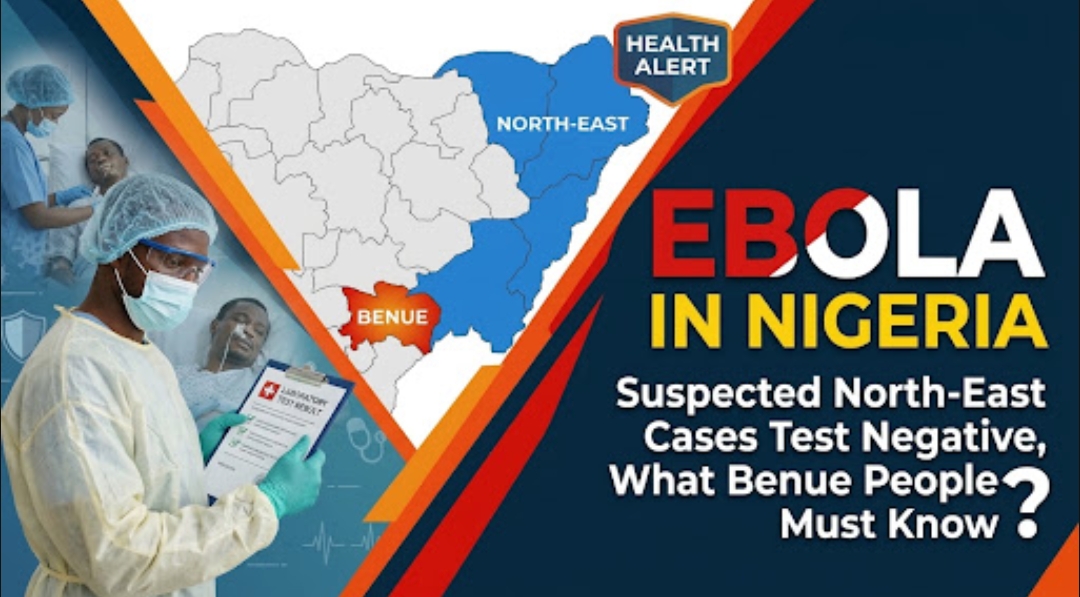
- The Nigeria Centre for Disease Control and Prevention (NCDC) announced two suspected Ebola cases in the North-East on Saturday, 31 October 2026.
- The cases were in Adamawa State. Samples from both people were negative for Ebola after two rounds of testing, according to the NCDC.
- The only laboratory-confirmed Ebola case in Nigeria in the current outbreak is a woman who travelled from Uganda to Abuja. She tested positive on 20 October 2026.
- Being a “suspected case” or a “contact” does not mean a person has Ebola.
- Not everyone who gets Ebola dies. Early medical care greatly improves the chance of survival.
- Anyone with fever, severe weakness or unexplained bleeding after possible exposure should seek medical help quickly and call health officials before going to a crowded place.
An Important Correction: What Has and Has Not Been Confirmed
Some messages shared on social media in recent days claim that “two more Ebola cases” have been found in the North-East. That is not what the latest official information says. According to reports by Premium Times, distributed by allAfrica, the NCDC later stated that the two suspected cases were in Adamawa State and that laboratory tests on both were negative for Ebola after two rounds of testing. The agency also said there is no laboratory-confirmed Ebola case in Adamawa, and that the earlier confirmed case in the Federal Capital Territory remains the only confirmed case in Nigeria.
This distinction matters. Fear and rumours can spread faster than any virus. When people believe that cases are everywhere, they may panic, avoid hospitals, hide sick relatives or turn against travellers. All of these reactions make an outbreak harder to control. At the same time, the fact that the two North-East tests were negative is not a reason to relax. Nigeria is dealing with an active outbreak that began in Central Africa, and health officials are still monitoring people who had contact with the confirmed patient.
What the Health Authorities Have Said So Far
The NCDC announced on social media that two suspected cases had been identified in the North-East, that both people had been isolated, and that contact tracing and laboratory testing were under way. Peoples Gazette reported that the agency stressed that a suspected case is not a confirmed case. The agency advised the public to keep up good hand hygiene, follow sanitation practices and listen to guidance from public health officials.
Premium Times reported that state health officials in Adamawa had traced and listed a small number of contacts of the two people, with figures of 17 and 18 in different official documents. These contacts are watched for symptoms. The NCDC also said that 62 contacts linked to the confirmed case in Abuja had been identified and were being monitored, and Channels Television carried a related headline saying that monitoring of these contacts is due to end on 13 November.
The confirmed patient is a woman who travelled from Uganda to Abuja. According to Ripples Nigeria, she developed symptoms on 7 October, sought care at a private health facility, and was confirmed to have the Bundibugyo strain of the Ebola virus on 20 October after tests at the NCDC National Reference Laboratory. Premium Times reported that she was later medically evacuated to Switzerland for continued treatment. The NCDC has said its response includes stronger surveillance, laboratory testing, isolation arrangements and contact monitoring.
The names and personal details of the people tested in Adamawa have been withheld by the media and the authorities to protect their privacy, and DAILY TALK is doing the same. Whatever the result of a test, patients and their families deserve respect and confidentiality.
The Wider Outbreak Behind the Headlines
To understand why Nigerian officials are cautious, it helps to look at the bigger picture. The current outbreak began in the Democratic Republic of the Congo in May 2026 and was declared a Public Health Emergency of International Concern by the World Health Organization on 16 May 2026, according to an overview of the outbreak. It is caused by the Bundibugyo strain of the virus, which is a different strain from the one behind the 2014 West African epidemic.
Premium Times reported that the World Health Organization’s latest update showed 10,274 confirmed cases and 4,992 deaths in the DRC as of 28 October, that Kenya had recorded nine confirmed cases and two deaths, and that Nigeria is one of five countries to have detected the Bundibugyo virus in this outbreak. These are the figures that were reported at the time of writing and they may change as new updates are released.
For Benue readers, the main message is simple. The outbreak is real and serious, but in Nigeria it is so far limited to one confirmed case and a group of people being monitored. That gives the country a chance to stop it early. Early action by ordinary people, such as reporting symptoms quickly and not hiding sick relatives, is one of the strongest tools the country has.
What Is Ebola?
Ebola is a severe illness caused by a virus. The World Health Organization describes it as often fatal, and says earlier outbreaks have had death rates of up to 90 percent. That figure comes from the worst outbreaks, and it does not mean that nine out of ten people will die every time. Death rates vary by strain, by how early the person gets care and by the quality of the health services. The WHO fact sheet on Ebola explains that supportive care, such as rehydration with fluids and treatment of specific symptoms, improves survival.
This is a point worth repeating, because fear often makes people believe that Ebola is a death sentence. It is not. Many people have survived Ebola, especially those whose illness was detected early and who reached a good treatment centre quickly. Survivors are also not a danger to their communities in daily life, and they should be welcomed back with dignity and support.
How Ebola Spreads: The Mode of Infection
Ebola is not spread through the air like the common cold. It spreads mainly through direct contact with the blood or body fluids of a person who is sick with the disease or who has died of it. According to WHO, infection can happen when the virus enters the body through broken skin or through the mucous membranes, which are the soft linings of the eyes, nose and mouth. It can also spread through contact with surfaces, clothing or bedding that carry these fluids.
The main routes are:
- Touching a sick person’s fluids. This includes blood, vomit, diarrhoea, saliva, sweat, urine and other body fluids.
- Touching contaminated items. Beds, clothes, towels, needles and floors soiled by an infected person can carry the virus.
- Handling the body of someone who died of Ebola. The body can remain highly infectious. Burial ceremonies where mourners touch or wash the body are a known cause of spread.
- Caring for a patient without protection. Family members and health workers are at risk when they care for a sick person without gloves, masks, gowns and good hand washing.
- Contact with infected wild animals. Fruit bats are considered the natural hosts of the virus, and the disease can reach people through contact with infected animals or their raw meat.
A person with Ebola is not infectious before symptoms begin. This is another reason why a healthy person who has simply travelled from the North-East or any other place is not a threat to others. The risk comes when someone is sick, and when others touch their body fluids without protection.
Ebola is also not spread by mosquitoes, by sharing a bus ride with a healthy person, or by simply living in the same town as someone who is under observation. Understanding this helps communities remain calm and act sensibly.
Early Signs and Symptoms to Watch For
The time between infection and the first symptoms, called the incubation period, is usually between two and 21 days. For this reason, health officials normally watch contacts of a patient for 21 days. The first signs can look like many common illnesses in Benue, such as malaria, typhoid fever or Lassa fever. This is why it is important not to guess, and instead to get tested when the situation calls for it.
| Stage | Common signs |
|---|---|
| Early | Sudden fever, extreme tiredness, severe headache, muscle and joint pain, sore throat, general weakness |
| Later | Vomiting, diarrhoea, stomach pain, loss of appetite, rash, red eyes, hiccups |
| Severe | Unexplained bleeding or bruising, such as bleeding gums, nosebleeds or blood in vomit or stool, confusion, difficulty breathing, organ failure |
Not everyone has bleeding. In fact, many patients do not. A person who has a fever and severe weakness, and who also had contact with a sick person, or who recently travelled from an affected area, should treat this seriously. The NCDC has advised that anyone with fever, severe weakness, headache, muscle pain, vomiting, diarrhoea or unexplained bleeding, especially after a possible exposure, should seek medical attention immediately.
A fever alone does not mean Ebola. Malaria is very common in Benue State, and thousands of people get fevers every month. The aim is not to frighten anyone, but to make sure that a fever that comes with a risk factor is not ignored. If you have a fever, tell the health worker if you recently travelled, cared for a very sick person, attended a funeral or handled a dead body.
Treatment: Early Care Saves Lives
There is no quick fix for Ebola, but there is a lot that doctors can do. The WHO explains that treatment is built around supportive care. This means replacing lost fluids, correcting body salts, treating fever and pain, supporting blood pressure and oxygen levels, treating other infections and managing complications. The earlier this care begins, the better the chances of survival.
Specific medicines and vaccines are a more complicated matter. Some licensed vaccines and antibody treatments were developed for the Zaire strain of Ebola, which caused the 2014 West African epidemic. The current outbreak involves the Bundibugyo strain, and health agencies have been testing experimental options for it. Readers should rely on the NCDC and the Federal Ministry of Health for up-to-date news on which vaccines or treatments are being used in Nigeria, and should not buy “Ebola cures” sold in markets, shops or online.
Several things should be avoided:
- Do not treat Ebola at home or with herbs alone. Delay can cost a life and can put the whole family at risk.
- Do not take antibiotics or injections without a prescription. They do not cure Ebola, and misuse can cause harm.
- Do not move a suspected patient to many hospitals. Call the health authorities and let them arrange safe transport to a designated isolation centre.
- Do not believe viral messages that promise salt-water or bitter-kola cures. Such claims are false and dangerous.
In Benue, the Benue State University Teaching Hospital in Makurdi has an isolation centre and a molecular laboratory that handles tests for several diseases, according to Leadership. Samples for Ebola are sent to the national reference laboratory, so patients should not expect on-the-spot results at local clinics.
Why Isolation Is Care, Not Punishment
One of the biggest fears in Nigeria, as the report that inspired this article notes, is that people who had contact with an infected person may refuse to be isolated. This fear is understandable. Isolation sounds frightening. Families worry about being separated from a loved one, about stigma in the neighbourhood and about the cost of care. Some people also worry that a hospital is a place where people go to die.
Health experts explain isolation differently. It is a way of giving a sick person focused medical care while keeping everyone else safe. A person under observation is kept in a clean and supervised place where health workers can check their temperature, give fluids and act quickly if their condition changes. For a person with Ebola, early admission can be the difference between life and death.
There is a clear difference between three groups of people:
- Suspected case: a person with symptoms and a possible exposure, whose test result is not yet known.
- Confirmed case: a person whose laboratory test has come back positive for Ebola.
- Contact: a person who was near a confirmed or suspected case, and who is watched for 21 days. A contact is not sick, and is not infectious unless symptoms appear.
Most contacts never develop Ebola. They simply have their temperature checked daily by health officials and are asked to report any symptoms. If you are told that you are a contact, cooperate. Your cooperation protects your family, your church, your market and your village. Community leaders, traditional rulers, pastors, imams and youth leaders in Benue have an important role in explaining this to their people, and in making sure that nobody who follows health advice is shamed or shunned.
Benue Is Not Isolated From the Outbreak: The Local Context
Benue State is a farming state with busy markets, large motor parks, many rural communities and heavy movement of people. Makurdi, the state capital, connects traffic from Abuja, Nasarawa, Taraba, Kogi, Enugu, Ebonyi and beyond. The state also shares a boundary with Taraba State in the North-East. This means people from Benue regularly travel to and from other states, and visitors regularly arrive. Movement of people is normal and good for trade. It also means that a disease can travel quickly if people ignore early warning signs.
Benue also has recent experience with a deadly viral disease. Earlier in 2026, the state faced a Lassa fever outbreak. The state epidemiologist said that by 26 February 2026, 45 cases had been confirmed out of 250 suspected cases, with 10 deaths, as reported by Leadership. The state later deployed extra officers to deal with the surge, according to another Leadership report. A separate report by The Frontier noted that health workers were among those who died. These events show how dangerous a viral fever can be for people who work in health facilities, and why proper protective measures are essential.
The Lassa experience also carries a warning for Ebola. Both diseases can begin with fever, weakness and headache, and both can involve bleeding in severe cases. Because the early signs look alike, health workers must always ask about travel, contacts and exposure, and patients must give honest answers. Hiding information, even out of fear or embarrassment, can delay the right test and endanger others.
Benue’s primary health centres are the first point of contact for many rural families, and their strength matters in any outbreak. The state government has reported work to rehabilitate and revitalise primary health centres, and it constituted a new Primary Health Care Board on Monday, as we reported in our story on the new Benue State Primary Health Care Board. Whether the board can help prepare clinics for outbreaks, with supplies of gloves, soap, thermometers and trained staff, will be an important test.
Travellers From the North-East and Other States: What Should Be Done?
The report that inspired this article asks how Benue people can avoid catching the virus from other states, especially from those who have travelled in the North-East. The honest answer has three parts.
First, the facts. At the time of writing, no case of Ebola has been confirmed in the North-East. The two suspected cases there tested negative. Treating every traveller from that region as a danger is unfair and unscientific. It can also make people hide their travel history, which would make real outbreaks harder to track.
Second, sensible habits. Everyone, whether they have travelled or not, should follow the same basic rules: wash hands often with soap and water or use hand sanitiser, avoid touching the blood or body fluids of any sick person, and seek medical help early for unexplained fever. A person who has recently come from another state, or from abroad, should watch their health for 21 days. If a fever, severe weakness, vomiting, diarrhoea or bleeding develops, the person should stay away from crowded places, avoid sharing a room with others and call the health authorities before travelling to a hospital.
Third, honesty at the hospital. Health workers need to know where a patient has been. Telling them about a recent trip to another state, a funeral you attended or a sick person you looked after helps them decide whether a test for Ebola is necessary. Honest answers help doctors protect the patient, the staff and the other patients.
Employers, schools, churches and transport unions can help by encouraging sick people to stay home, by providing hand-washing points and by sharing correct information. Motor park leaders and commercial drivers are especially important, since they meet many travellers every day.
Prevention: A Practical Checklist for Benue Families
| What to do | Why it helps |
|---|---|
| Wash hands with soap and clean water often, especially after using the toilet, before eating and after being in public places | Removes germs from hands and cuts the risk of many infections |
| Use alcohol-based hand sanitiser when water is not available | Gives protection when travelling or in markets |
| Do not touch the blood, vomit, faeces or other fluids of a sick person without protection | This is the main way Ebola spreads |
| Avoid handling or eating bats, monkeys, apes and other bush animals, especially sick or dead ones | Wild animals can carry the virus |
| Cook meat thoroughly and wash fruit before eating, particularly fruit that may have been bitten by bats | Reduces contact with animal fluids |
| Do not wash, touch or kiss the body of someone who died of a suspected infectious disease; call health officials for a safe burial | The body of an Ebola victim stays highly infectious |
| Report fever with weakness, vomiting or bleeding to health workers quickly | Early care saves lives and stops spread |
| Rely on official sources such as the NCDC, the Benue State Ministry of Health and trusted media | Fake news causes fear and bad decisions |
Safe Burials and Funerals in Benue Communities
Funerals are among the most important events in many Benue communities. Families gather from far away, mourners pay respect to the dead and communities support each other. These traditions carry great meaning, and nobody wants to take away a family’s chance to say goodbye. At the same time, the bodies of people who died of Ebola are very infectious, and unsafe burials have been a major cause of spread in past outbreaks.
If a person dies after a sudden illness with fever, vomiting, diarrhoea or bleeding, the family should not wash or touch the body. They should call the local health authorities, who have trained teams that can carry out a safe and dignified burial. Such burials can still respect religious and cultural wishes, with prayers, a funeral service and a marked grave. Families should be given clear information and support rather than blame. Local leaders should explain this ahead of time, so that people understand the rules before a crisis arises.
Caregiver Safety: How to Protect Yourself While Helping
In Benue, as in most places, families care for the sick at home. In an Ebola outbreak, this kindness can become dangerous. Studies of past outbreaks show that many infections happen among relatives and health workers who looked after a sick person without protection. That is why caregiver safety is a key part of this story.
For family members and neighbours
- Call for help first. If someone has fever with severe weakness, vomiting, diarrhoea or bleeding, and has had a possible exposure, contact the health authorities or the nearest health facility by phone before you bring the person in.
- Limit contact. Let one healthy adult care for the patient while waiting for help. Keep children, pregnant women, older people and people with weak immunity away.
- Do not touch body fluids. Avoid direct contact with blood, vomit, faeces, urine and sweat. If protective gloves and a mask are available, wear them. If not, avoid touching the patient and wait for trained responders.
- Wash hands thoroughly. Use soap and clean water after any contact with the patient or with objects in their room.
- Do not share items. Plates, cups, clothes, towels and bedding used by the patient should not be used by others. Leave them for the health team to handle.
- Keep the area clean. Follow the instructions of health officials about disinfecting surfaces. Do not improvise with strong chemicals without guidance.
- Watch your own health. If you have cared for a suspected patient, tell the health authorities and monitor your temperature for 21 days.
For health workers and traditional healers
Nurses, doctors, community health workers, laboratory staff, ambulance drivers and cleaners face the highest risk. Their safety depends on having the right equipment, including gloves, gowns, face shields, masks and boots, and on being trained to put it on and take it off properly. Hospitals and clinics should have a screening point at the entrance, a separate area for patients with suspected infections, and a clear plan for calling the authorities. Health workers who feel unwell should report it at once.
The Lassa fever outbreak earlier this year, in which health workers were infected and some died, is a reminder of how real this risk is. Employers and governments have a duty to supply protective equipment, and to pay and support staff who take risks for others. Traditional and spiritual healers, who are trusted by many families, should also refer anyone with fever, vomiting or bleeding to a hospital, and should avoid touching the blood or fluids of patients.
How the World Has Fought Dangerous Viruses Before
Nobody should lose hope when they hear about a new outbreak. Humanity has beaten or controlled many deadly viral diseases, and the lessons from those efforts apply to the situation in Nigeria today. Looking at the history also helps explain why health officials ask for the same simple actions again and again: find cases early, isolate them, trace contacts, protect health workers, vaccinate where possible and keep the public informed.
Smallpox: the disease the world defeated
Smallpox killed millions of people for centuries. It was declared eradicated in 1980 after a worldwide campaign led by the World Health Organization. The key strategy was vaccination combined with surveillance and containment. Teams searched for cases, isolated the sick and vaccinated the people around them, a method known as ring vaccination. Smallpox remains the only human disease to have been completely wiped out, and it proves that a determined, coordinated effort can work.
Polio: from hundreds of thousands of cases to a handful
Polio, a virus that can cause paralysis in children, once paralysed hundreds of thousands of children each year. Mass immunisation campaigns, with health workers going house to house, cut the number of cases dramatically. Nigeria was certified free of wild polio in August 2020, a major milestone for Africa. Yet the virus can return where children are not vaccinated, and Nigeria has faced outbreaks linked to vaccine-derived strains. The lesson is that progress must be protected by continued vaccination and vigilance.
SARS in 2003
Severe acute respiratory syndrome, or SARS, appeared in 2002 and 2003 and spread to dozens of countries within weeks. It was brought under control within months, mainly through case detection, isolation of patients, quarantine of contacts, infection control in hospitals and international cooperation. There was no vaccine. The outbreak showed that classic public health methods can stop a fast-moving virus when countries share information quickly.
Ebola in 2014 and Nigeria’s own success story
The 2014 to 2016 Ebola epidemic in West Africa was the largest in history and devastated Guinea, Liberia and Sierra Leone. Nigeria, with a population of over 200 million, was also hit when an infected traveller arrived in Lagos, but the country managed to stop the spread. According to an overview of Ebola in Nigeria, the outbreak involved 20 confirmed cases in Lagos and Rivers, and the World Health Organization declared Nigeria free of Ebola on 20 October 2014, calling the response a “spectacular success story”.
How did Nigeria do it? Health teams quickly set up an emergency operations centre, traced hundreds of contacts, monitored them daily, isolated those who became sick and educated the public. Doctors, nurses, community workers and many ordinary Nigerians cooperated. Several health workers lost their lives caring for patients, and their sacrifice is remembered. The episode shows that Nigeria already has experience and skills in stopping Ebola, and that quick detection and community cooperation work.
COVID-19
The COVID-19 pandemic, which began in late 2019, reached every country. In Nigeria, the federal government imposed a lockdown in some states from 30 March to 15 May 2020, as described in an overview of the pandemic in Nigeria. The country also used testing, contact tracing, travel restrictions, public information campaigns, hand-washing, mask-wearing and, later, vaccination. The pandemic taught the world about the importance of reliable information, strong laboratories and quick vaccine development, but also about the cost of closing economies and schools for long periods. Public health measures work best when they are targeted and well explained.
Common Lessons From Every Outbreak
When experts study these outbreaks, the same themes appear again and again.
- Speed matters. The earlier a case is found, the easier it is to stop the spread.
- Trust matters. People follow advice from people they trust. Community, religious and traditional leaders are essential partners.
- Protect the protectors. Health workers must have equipment and training, because when they fall sick, the whole system weakens.
- Fight rumours. False cures and false alarms cost lives. Sharing only verified information is a form of public service.
- Do not stigmatise. Survivors, contacts, travellers and health workers should be supported and not shunned.
- Use simple tools well. Soap, clean water, thermometers, gloves and telephones are more powerful than many people realise.
What Government and Community Leaders Can Do in Benue
While individuals have a role, the biggest responsibility lies with leaders. Health officials in Benue State can strengthen readiness by training frontline workers, stocking health centres with protective items, setting up reliable communication lines between communities and the state epidemiology team, and making sure that suspected samples can be moved quickly to the national laboratory. They can also publish regular updates, so that residents are not left to rely on rumours.
Local government chairmen, traditional rulers, church and mosque leaders, market associations, transport unions and youth groups can help in several ways. They can hold short awareness talks, install hand-washing stations at markets and motor parks, encourage sick people to seek care, and remind their communities not to mistreat people who are under observation. Radio stations in local languages are especially valuable, since many rural residents get their news this way. Messages should be given in Tiv, Idoma, Igede and other languages spoken across the state, as well as in English and Pidgin, so that nobody is left out.
Security conditions in some parts of Benue add another challenge, because insecurity can limit the movement of health teams and the ability of patients to reach a facility. Readers who follow our coverage of the situation in Sankera, for example, will know how much daily life can be disrupted. Planning for outbreaks must therefore take into account roads, communication networks and safe routes for responders. For news on how local conflicts affect services, see our Metro section.
Dealing With Fear and Misinformation
An outbreak always brings a wave of messages on WhatsApp, Facebook and other platforms. Some contain useful warnings, but many contain false claims, such as fake lists of infected people, invented cures or doctored photographs. Sharing such messages can cause panic, damage innocent people and distract from real advice.
Before you forward a message, ask yourself four questions. Who sent it? Is it supported by the NCDC, the Ministry of Health or a trusted news organisation? Does it ask you to buy something? Does it blame a particular group of people? If the answers are doubtful, do not share it. Instead, check the NCDC website at ncdc.gov.ng or the World Health Organization page linked above.
Frequently Asked Questions
Is there Ebola in the North-East?
No case has been confirmed in the North-East. Two suspected cases in Adamawa State tested negative after two rounds of testing, according to the NCDC.
How many confirmed Ebola cases are in Nigeria?
The NCDC says the confirmed case in the Federal Capital Territory is the only one in Nigeria in the current outbreak. Figures can change, so check official updates.
Can you get Ebola from someone who looks healthy?
A person who has no symptoms is not infectious. The risk comes from contact with the blood or body fluids of someone who is sick or who has died of Ebola.
Does everyone who gets Ebola die?
No. The chance of survival is higher when the illness is detected early and the patient receives supportive care in a health facility.
What should I do if I have a fever after travelling?
Do not panic. Stay away from crowds, avoid sharing a room with others and call your local health authority or health facility for guidance before going out. Tell the health worker about your travel and any contact with sick people.
Where can I get reliable information?
The NCDC, the Federal Ministry of Health and the Benue State Ministry of Health and Human Services are the main official sources. Trusted media outlets also report their updates.
The Bottom Line
The latest official information is reassuring in one way and sobering in another. Two suspected Ebola cases in the North-East have tested negative, and Nigeria so far has just one confirmed case in the current outbreak. But the virus is still active in other countries, contact monitoring is ongoing and the situation can change quickly. For people in Benue State, the best response is neither panic nor complacency. It is knowledge and calm action: wash your hands, avoid contact with the blood and fluids of sick people, report symptoms early, treat travellers with respect, bury the dead safely and share only verified information.
History shows that outbreaks can be defeated when governments, health workers and ordinary people work together. Nigeria did it in 2014, and it can do it again. DAILY TALK will continue to follow this story and report any new official information. For more on the work of the state’s health institutions, read about the new Primary Health Care Board, and visit our Health section for continuing updates.
Editor’s note: This article is for general information and is not a substitute for medical advice. If you or someone you know has symptoms or may have been exposed to Ebola, contact a health worker or your local health authority immediately. Figures and statements are drawn from the NCDC, the World Health Organization and the news reports linked above, and may change as the situation develops.