
[ad_1]
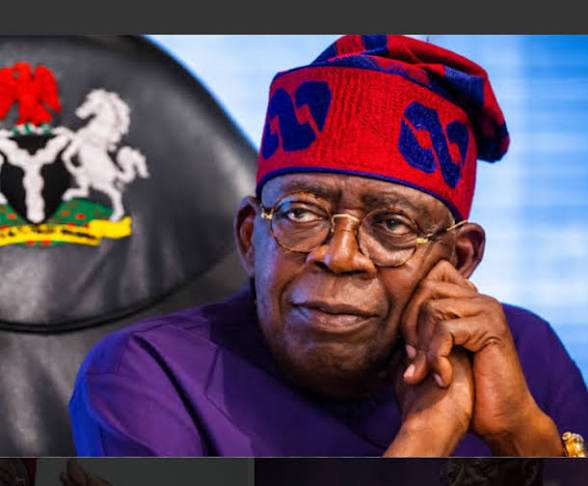
Through Bola Ahmed Tinubu
Since 2023, we have now made tricky however important selections: taking out the petrol subsidy, unifying the alternate price, modernising the tax framework, and coordinating motion on inflation. Those reforms have restored macro steadiness, quadrupled federation income since 2021 and rebuilt the credibility of the State’s steadiness sheet. The effects are actually visual: actual GDP expansion reached 4.43% in Q2 2026 and four.2% in H1, up from 2.74% in 2023, whilst headline inflation fell to fourteen.63% in September 2026 from 20.98% a yr previous.
Meals inflation, whilst nonetheless increased, stood at 19.59%. Gross exterior reserves reached USD 55.1 billion as of 9 October 2026, together with about USD 46 billion in web reserves, an 18-year excessive. The NFEM alternate price stood at ₦1,333/US$, with the marketplace unfold under 5%, and public debt stays low in comparison to friends. Nigeria’s value of borrowing helps to keep falling. Self belief has a worth, our value of borrowing is happening, and the rustic chance top class has vastly lowered.
This adjustments the aim of public borrowing. The target is to increasingly more direct new borrowing against productive capital funding, whilst keeping up fiscal self-discipline, lowering refinancing pressures and making sure that public debt interprets into measurable financial price. Nigeria borrows to spend money on roads, ports, rail and tool that can generate expansion, income and jobs for many years.
Each and every Naira and each greenback raised is going to property that create price, and that price repays the debt. That is how Nigeria will achieve the target of a USD 1 trillion economic system by way of 2030: no longer via intake, however via funding within the infrastructure that makes expansion conceivable. This shift is being supported by way of a more potent fiscal place: tax-to-GDP has risen to twelve.5% from 7%, web FAAC higher by way of 44% from ₦15.2 trillion in 2024 to ₦21.9 trillion in 2025, and Nigeria recorded a ₦20.1 trillion business surplus in H1 2026, virtually double the ₦10.2 trillion recorded in H1 2025.
Borrowing to construct, to not bridge, no longer for intake:
Nigeria is basically replacing the aim of public borrowing: from financing momentary fiscal pressures to making an investment in property that can turn out to be the economic system for generations. This shift is happening with public debt at 35.75% of GDP in Q2 2026 and debt carrier at about 65% of income in H1 2026, underscoring why funding should stay anchored in fiscal self-discipline.
The Federal Government Council financial technique is apparent in this level: no deficit monetisation and no unfunded commitments throughout the pre-election length. On the middle of this disciplined shift against productive borrowing are our management’s legacy tasks:
The management is focusing productive borrowing on financing primary infrastructure tasks, together with the Lagos–Calabar Coastal Freeway; enhancements to the facility sector and electrical energy grid; the Sokoto–Badagry Superhighway; the Trans-Sahara Superhighway; and upgrades to Nigeria’s primary business ports in Lagos.
Along side different precedence tasks, the rehabilitation of key hospitals, and funding in schooling and vocational coaching, those investments are game-changing. They are going to attach whole financial areas, release agricultural and business doable, cut back logistics prices, draw in non-public funding and create masses of 1000’s of direct and oblique employment alternatives over the years.
Supply is already visual at the Lagos-Calabar freeway as a big delivery infrastructure mission as of August 2026. Lot 2 used to be reported to be over 80% whole, whilst Calabar–Akwa Ibom works had been over 30% whole. This higher emphasis on funding could also be obvious on the subnational stage, the place the percentage of state spending dedicated to capital expenditure rose from 46% in 2023 to 61% in 2025.
This isn’t merely about development infrastructure. It’s about reshaping Nigeria’s financial geography, unlocking new resources of expansion and developing the productive capability to succeed in a USD 1 trillion economic system. The debt is finite; the industrial price those property can generate will undergo for generations.
II. Price for cash and impression on expansion:
The legacy tasks are decided on and financed on price addition: what they go back to the economic system for each Naira spent. They attach manufacturing to markets, ports to the hinterland and Nigeria to its neighbours. The Lagos–Calabar Coastal Freeway on my own is anticipated to cut back logistics prices by way of 15–20% alongside the hall and may just upload as much as 2% to Nigeria’s GDP via new business zones, business and tourism.
Those tasks also are a number of the biggest task creators within the nation. The Coastal Freeway is anticipated to generate round 100,000 direct jobs in development and engineering and greater than 150,000 oblique jobs in logistics, fabrics and products and services.
Around the Sokoto–Badagry and Trans-Sahara corridors, the similar good judgment applies to the enhancement of the facility grid, ports, rail strains, and social infrastructure: jobs throughout development, and lasting employment within the industries, farms, and companies that develop alongside the routes when they open.
Decrease delivery prices imply decrease meals costs, extra aggressive exports and more potent income for the State. This is price for cash: property that pay again via expansion, jobs and income, financed over a horizon that fits their existence, and every one a step against the USD 1 trillion economic system.
III Lengthy-term commitments for long-term property:
The construction of Nigeria’s debt now suits the character of what it budget. The federal government is extending the adulthood profile and transferring from momentary borrowing to long- and really long-term maturities at lower price. Infrastructure constructed to remaining 40 years will have to be financed over a horizon in line with its existence. Global traders are keen to decide to Nigeria over ten, fifteen years and past, which is the clearest sign of self assurance within the nation’s trajectory. The wider financing surroundings could also be taking advantage of financial easing: the Financial Coverage Fee used to be reduce by way of 350 foundation issues on 22 September 2026, from 26.5% to 23%.
But lending charges stay above 30%, reinforcing the wish to protected longer-tenor, extra aggressive financing for productive funding.
IV. Credibility recognised by way of global markets:
The global monetary neighborhood has delivered a transparent and unparalleled convergence of certain indicators on Nigeria. All 3 primary credit standing businesses (S&P, Fitch and Moody’s) have taken certain score movements, with S&P upgrading Nigeria’s sovereign score and Fitch and Moody’s elevating their outlooks to Sure.
FTSE Russell has restored Nigeria to Frontier Marketplace standing, reopening its visibility to international institutional traders, whilst the FATF has got rid of Nigeria from its gray listing, recognising development in monetary transparency and compliance. Nigeria’s a success Eurobond issuance, attracting robust global call for, additional demonstrates renewed investor urge for food for Nigerian sovereign chance. The particular score movements beef up this convergence: Fitch charges Nigeria B with a Sure outlook as of 9 October 2026; Moody’s charges it B3 with a Sure outlook; and S&P upgraded Nigeria to B on 15 Might 2026 with a Strong outlook.
Nigeria’s go out from the FATF Gray Checklist in October 2025 and the EU listing in January 2026 additional helps progressed monetary transparency and compliance. Those don’t seem to be political endorsements; they’re unbiased tests by way of international score businesses, index suppliers, regulators and traders, recognising more potent exterior reserves, progressed macroeconomic control and larger monetary credibility. The results are transformative: broader get admission to to global capital, higher investor participation, and the possibility of decrease financing prices and longer maturities. Each and every growth in Nigeria’s value of capital creates further capability to finance infrastructure, boost up expansion and ship my executive’s financial transformation schedule.
V. What the global neighborhood expects:
The message from global traders, international banks and building establishments is unequivocal: Nigeria has undertaken the reforms; now’s the time to speculate, construct and ship at scale. Global capital increasingly more sees Nigeria as a big infrastructure funding alternative, with lenders appearing a rising urge for food to finance our expansion tasks (Roads, Railways, Electrical energy, Water and Agriculture, Shipping, and Social Infrastructure) and strengthen the rustic’s long-term building.
Bettering marketplace self assurance is developing alternatives for extra aggressive financing phrases and larger get admission to to long-term capital.
Nigeria should take hold of this window of alternative. The best chance is now not merely the price of borrowing, however the financial value of failing to speculate. Once a year of not on time infrastructure method misplaced expansion, upper logistics prices, overlooked funding and jobs which can be by no means created. The global monetary neighborhood is able to strengthen credible, bankable tasks.
Nigeria should now convert this self assurance into capital expenditure, finished infrastructure and lasting financial price. The reforms have opened the door to capital; supply is what’s going to flip that capital into prosperity. The supply schedule is mirrored within the 5 priorities FEC recognized for the following degree: meals affordability and effort worth balance; finances harmonisation and monetary self-discipline; high-impact mission of entirety and funding in essential infrastructure; an financial coverage framework and regulatory potency; and centered family strengthen and funding in human building.
At this level, it should be obviously said that we didn’t adopt tricky reforms simply to stabilise the economic system. We undertook them to release Nigeria’s financial doable and construct lasting prosperity. Those reforms laid the basis for financial restoration, whilst infrastructure funding will force expansion, create jobs and strengthen residing requirements. The following section of Nigeria’s financial transformation should be outlined by way of tasks finished at the floor and tangible effects for Nigerians, no longer coverage paperwork on my own.
Borrowing and long-term funding
We’re shifting from borrowing to bridge fiscal gaps to borrowing to construct the productive capability of our country. The important thing query isn’t how a lot we borrow, however what we construct, the price we create and the long run we go away in the back of. Even supposing loans should be repaid, the roads, ports, railways and financial alternatives they finance can serve generations.
We can’t construct a $1 trillion economic system with infrastructure designed for an economic system a fragment of that dimension. We’re making an investment in infrastructure for the following 50 years, and our financing technique should replicate that ambition. We should additionally weigh the price of borrowing towards the price of state of no activity as a result of each not on time mission method misplaced alternatives for expansion, employment and funding.
Infrastructure and financial impression
We’re development greater than highways. We’re opening financial corridors, connecting markets, supporting industries and reshaping Nigeria’s financial geography. The worth of a highway extends past the finished development to the farms, factories, companies and communities it connects.
Each and every kilometre of infrastructure creates jobs throughout development and opens alternatives for many years. Infrastructure supplies the basis for personal funding, business building, business and employment. We’re subsequently development an interconnected nationwide economic system wherein roads, railways, ports and tool infrastructure paintings in combination to strengthen productiveness and reinforce Nigeria’s competitiveness in international markets.
Global self assurance and get admission to to capital
Global self assurance provides Nigeria a possibility to protected higher financing, boost up funding and ship tangible effects for its electorate. We should profit from our renewed get admission to to global markets by way of turning investor self assurance into productive funding. That funding should translate into financial expansion, task advent and progressed residing requirements.
Duty and supply
Securing financing is simplest the start. The actual success lies in finishing tasks, handing over price for cash, and bettering Nigerians’ lives. Each and every Naira borrowed should be justified by way of the industrial price it creates, and we should measure each mission by way of its effects.
Our ambition isn’t merely to announce a big infrastructure programme, however to ship tasks that turn out to be Nigeria’s economic system. We should pursue our building targets with urgency whilst keeping up the self-discipline required for accountable public monetary control.
Construction a $1 trillion economic system
A $1 trillion economic system is not going to emerge via declarations on my own. We should construct it via funding, upper productiveness, industrialisation and business. Nigeria’s largest asset is its financial doable, and we should give you the infrastructure to show that doable into prosperity. We don’t seem to be borrowing towards our youngsters’s long term. We should make investments responsibly to extend alternatives to be had to them.
Bola Ahmed Tinubu
President & Commander-in-Leader of the Armed Forces of the Federal Republic of Nigeria
[ad_2]
Source link